Reading Time: 12 Minutes
Difficulty Level: Beginner to Intermediate
Reviewed By: FinanceInfoIn Editorial Team
Table of Contents
- The Midnight Panic Attack You Never Want to Have
- Why Digital Assets Disappear Overnight
- Picking the Right Shield for Your Coins
- Setting Up Impenetrable Defense Walls
- The Golden Rule of Seed Phrases
- Everyday Habits for Maximum Safety
Quick Summary
Securing your digital money does not require a computer science degree. By understanding the difference between hot and cold storage, you can easily separate your spending money from your life savings. Setting up two-factor authentication and writing down your seed phrase offline will block almost all common hacking attempts. Simple daily habits keep your investments safe from invisible online threats.
Key Takeaways
- Never store your secret recovery phrase on a phone, email, or cloud drive.
- Use a hardware device for long-term storage of large digital funds.
- Always enable app-based two-factor authentication (like Google Authenticator) instead of SMS.
- Treat your crypto just like physical cash; do not carry all of it in your daily spending account.
The Silent Silent Heartbreak of a Zero-Balance Screen
My heart dropped to my stomach at 3 AM. I grabbed my phone to turn off the alarm, only to see three email notifications stacked on my lock screen. Someone from a different country was trying to log into my main exchange account.
I had less than a few hundred dollars in my regular bank account, but my digital wallet held almost everything I had saved over the past few months. I felt completely helpless. My hands were shaking so much that I could barely type my password to check if my funds were still there.
That night, I realized a terrifying truth. I was walking around in a bad neighborhood with my life savings in my back pocket, protected by nothing more than a simple password I used for my Netflix account. The fear of losing everything in a single click is something I never want to experience again.
Many people think their digital money is safe just because they use a popular app. The reality is quite different. Hackers do not need to break into your house to steal your wealth; they just need to trick you into clicking the wrong link or guessing a weak password.
When you lose traditional money, a bank might refund you. When you lose digital coins, they are gone forever. There is no customer service number to call, and no manager to complain to.

Why Digital Assets Disappear Overnight
People lose their digital money every single day, and it usually happens quietly. You might be watching a video online, clicking a link that looks perfectly normal, and suddenly your account is completely empty.
Think of your digital wallet like a house. If you leave the front door wide open, you cannot blame a stranger for walking in. Scammers are always scanning the internet for open doors. They use fake websites, pretend to be support agents on social media, and even send fake text messages to steal your login details.
The biggest mistake beginners make is trusting the internet too much. They take screenshots of their secret passwords or save them in their email drafts. If a hacker gets access to your email, they instantly get the keys to your digital vault.
We need to change how we think about online safety. Securing your investments is not about being a tech genius; it is about building simple, unbreakable habits.
Picking the Right Shield for Your Coins
Not all storage methods are created equal. You would not keep a million dollars in cash inside your daily leather wallet. You would put it in a heavy steel vault at the bank. The exact same logic applies to your digital money.
We generally divide storage into two main types: hot and cold. Hot storage means your account is connected to the internet. Cold storage means your money is kept completely offline, safe from remote hackers.
Here is a simple breakdown to help you understand the difference.
If you want to trade every day, keep a small amount in a software app on your phone. However, if you are holding money for the future, you absolutely need a physical hardware device.
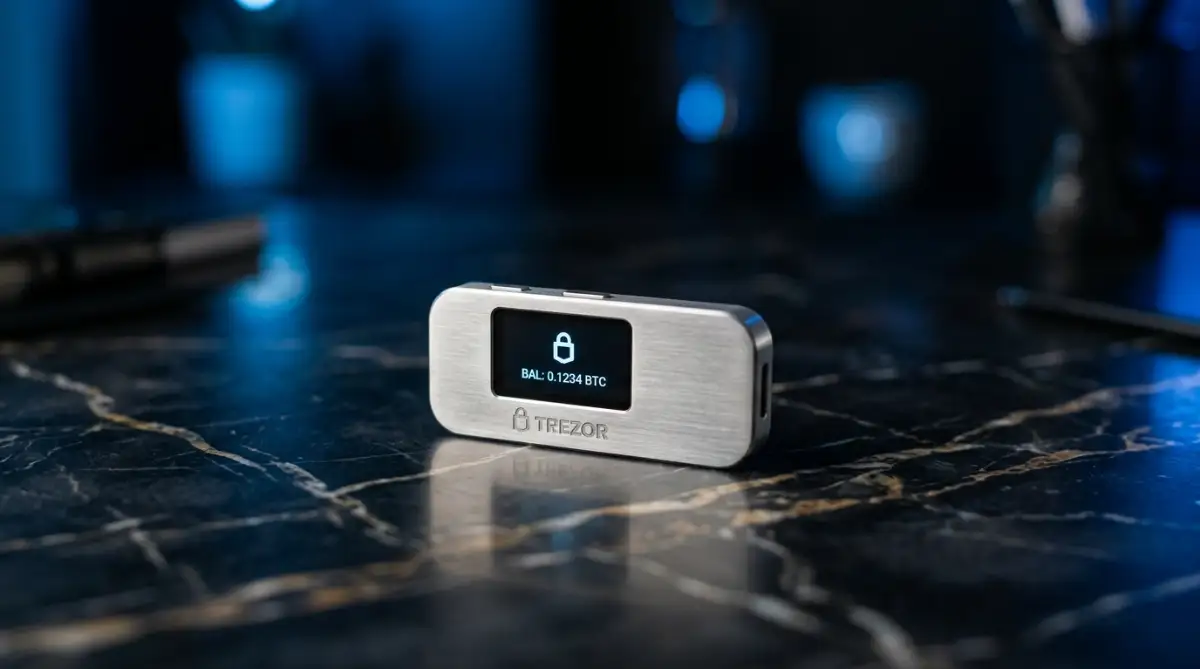
Think of a hardware device like an actual physical key. Even if a hacker knows everything about your account, they cannot move a single penny unless they physically press the buttons on the device in your hand.

Setting Up Impenetrable Defense Walls
Once you have chosen where to keep your funds, you need to build strong walls around them. A good password is your first line of defense.
Many people use their pet's name or their birthdate. This is incredibly dangerous. Hackers use automated software that can guess thousands of simple passwords every second. You need a password that looks like complete nonsense to anyone reading it.
Pro Tip: I used to keep my passwords saved in my browser because I was too lazy to type them out. One day, a suspicious browser extension almost copied all my saved data. Now, I use a dedicated, encrypted password manager for everything, and I never let Google Chrome or Safari save my highly sensitive logins.
Beyond a strong password, you must use Two-Factor Authentication (2FA). This means even if someone steals your password, they still need a temporary code from your personal phone to get in.
Never use SMS text messages for your 2FA codes. Scammers can easily trick your phone provider into moving your phone number to their SIM card. This is called a SIM swap attack. Instead, always use an authenticator app like Google Authenticator or Authy.
Let us look at how different password habits affect your overall safety.
This video perfectly explains why SMS two-factor authentication is broken and exactly how to switch to a secure authenticator app today.
The Golden Rule of Seed Phrases
When you create a new decentralized account, the system gives you a list of 12 or 24 random words. This is called your seed phrase, or recovery phrase.
This string of words is the most important thing you will ever own in the digital world. It is the master key to your wealth. If your phone breaks, your computer crashes, or you lose your physical device, these words are the only way to get your money back.
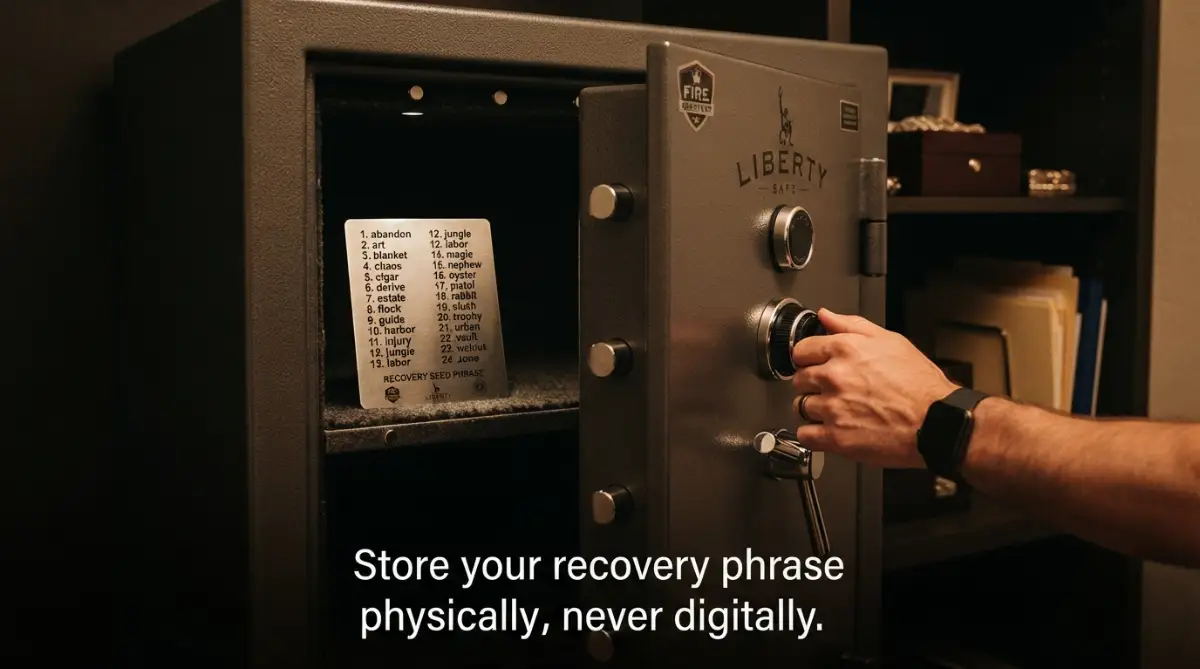
You must never type these words into any device connected to the internet. Do not take a photo of it. Do not save it in your Apple Notes. Do not email it to yourself.
Write it down with a physical pen on a piece of high-quality paper. Better yet, engrave it on a metal plate that cannot burn in a fire or get destroyed by water.
If someone sends you a message asking for these words to "verify your account" or "fix a bug", they are trying to rob you. Real support agents will never, under any circumstances, ask for your recovery words.
Think of your recovery words like the deed to your house. Whoever holds that piece of paper owns the property, no matter what your name says. Keep it locked away in a safe, hidden place where no one else can accidentally find it.
Everyday Habits for Maximum Safety
Security is not a one-time setup. It is a lifestyle and a daily habit.
You should treat every email and direct message with extreme suspicion. Phishing is a technique where scammers create exact copies of popular websites. You think you are logging into your regular exchange, but you are actually typing your details directly into a hacker's database.
Always double-check the website address in your browser before typing your password. Bookmark your favorite platforms so you never have to search for them on Google. Scammers often pay for search engine ads to push their fake websites to the top of the results.
Here is a quick reference guide to spot common online traps.
Finally, keep your computer and phone software completely up to date. Technology companies constantly release updates to patch security holes. Ignoring these updates leaves you exposed to new viruses.
If you trade frequently on your computer, consider buying a cheap, separate laptop just for your financial transactions. Do not use this laptop to download games, watch movies, or browse random websites. By isolating your financial activities, you drastically reduce the chance of accidentally downloading dangerous software.
Protecting your investments takes a little bit of extra effort, but the peace of mind is absolutely worth it. When you lock down your defenses properly, you can sleep soundly at night knowing your digital wealth is completely secure and waiting for you the next morning.
Strengthening Your Digital Fortress with Advanced Defense
Protecting your money is not just about having a strong password. Once you have the basics down, you need to think like a professional security expert. Most people stop at a basic wallet, but the pros use extra layers to make sure no one can touch their funds.
One of the most effective methods is address whitelisting. This is a feature on many platforms that only allows withdrawals to specific, pre-approved addresses. Even if a thief gets into your account, they cannot send your money to their own wallet because it is not on your "white list." It adds a massive layer of safety for your digital asset portfolio.
Another expert move is using a Multi-Signature (Multi-sig) wallet. Imagine a physical vault that requires two different keys held by two different people to open. A Multi-sig wallet works exactly like that. You might have one key on your laptop and another on your phone. A transaction only happens if both devices approve it. This makes it almost impossible for a remote hacker to steal anything.
Pro Tip: I personally use a separate email address for my financial accounts that I don't use for social media or shopping. This makes it much harder for scammers to find my login ID through public data leaks.
You should also look into air-gapped systems. These are devices that never, ever connect to the internet. They stay completely offline while you sign transactions. It is like writing a check in a locked room and then passing only the signed paper through a slot in the door. The pen and the checkbook never leave the room.
Keeping your software updated is also part of this advanced strategy. Many hacks happen because people use old versions of apps with known security holes. Whenever you see an update notification, install it immediately. These updates often contain "patches" that fix the very latest tricks used by hackers. Understanding smart contract basics can also help you avoid interacting with dangerous apps.
Fatal Errors That Could Drain Your Savings
Even with the best tools, one small mistake can lead to a total loss. I have seen people lose years of savings because they were in a rush or got a bit too comfortable. The most common error is social media bragging.
When you post screenshots of your gains or talk about which coins you hold, you put a target on your back. Professional thieves scan Twitter and Reddit looking for targets. They will track your username, find your email, and start trying to break into your life. Stay quiet about your wealth; true security starts with privacy.
Another massive mistake is improper seed phrase storage. Some people think they are being clever by "splitting" their seed phrase and saving half in a Google Doc and half in a physical notebook. This is a terrible idea. If your Google account is compromised, the hacker already has half the keys. They can use software to guess the rest in minutes.
Many beginners also fall for fake browser extensions. You might see an ad for a tool that promises to help you track prices. Once you install it, the extension reads everything you type, including your passwords. Only download software from official websites and check the reviews carefully.
Pro Tip: Always do a "test transaction" with a tiny amount of money before sending a large sum. I once saved myself from losing a big transfer because I noticed the address was wrong during a $5 test run.
People also forget about the physical world. If you leave your hardware wallet on your desk and someone steals it, they still need your PIN. But if you wrote your PIN on a sticky note and put it on your monitor, you have basically handed them your money. Treat your hardware wallet like a gold bar and hide it accordingly.
Quick Action Checklist
- Enable App-based 2FA on every single account today.
- Move your long-term holdings from an exchange to a hardware wallet.
- Delete any photos or screenshots of recovery phrases from your phone gallery.
- Set up a withdrawal whitelist on your primary exchange.
- Create a "Decoy Wallet" with a small amount of money for daily use.
- Check your email on HaveIBeenPwned to see if your data was leaked.
- Buy a fireproof and waterproof container for your paper backups.
Moving Toward a Secure Financial Future
Taking these steps might feel like a lot of work at first. However, the feeling of knowing your hard-earned money is safe is priceless. I spent many nights lying awake wondering if my accounts were secure, but once I followed these steps, that stress simply vanished.
You have worked hard for your money. Do not let a stranger on the other side of the world take it from you in a heartbeat. Start small by securing your email, then move on to your wallets. Consistency is your best friend here.
Learning how to grow your digital asset portfolio is exciting, but protecting what you already have is more important. Think of security as a wall you build brick by brick. Every new habit you form adds another layer of stone to that wall.
I truly believe that anyone can master these security steps with just a little bit of patience. I started from zero, just like you, and I learned through trial and error. My goal is to make sure you only learn through my advice, not through your own losses. Take control of your digital life today and build a wall that no one can climb.
Which security step are you going to implement first today? Let me know in the comments below!
Answers to Your Burning Security Questions
Can I just use my phone's fingerprint to secure my wallet?
Biometrics are great for convenience, but they should not be your only defense. If your phone is stolen or someone forces you to touch the sensor, your funds are at risk. Always combine biometrics with a strong, unique PIN or password for the best results.
What happens if the company that made my hardware wallet goes out of business?
Your money is not stored "inside" the company; it is on the blockchain. As long as you have your 12 or 24-word recovery phrase, you can put those words into any other brand of wallet and get your money back. Your seed phrase is the real key, not the physical device.
Is it safe to keep my crypto on a big exchange like Coinbase or Binance?
While large exchanges have good security, you do not truly own the money there. If the exchange goes bankrupt or freezes your account, you cannot access your funds. It is best to only keep what you plan to trade on an exchange and move the rest to your own private wallet.
Should I tell my family where I hide my recovery words?
Yes, it is wise to let one trusted person, like a spouse or a parent, know how to access your funds in case of an emergency. However, make sure they understand the importance of keeping it secret. You can also use a "Legacy" service offered by some platforms to pass on your assets safely.
Can hackers get my seed phrase if my computer has a virus?
If you type your seed phrase into a computer with a virus, yes, they can. This is why you should only ever enter your seed phrase into your physical hardware wallet device. A hardware wallet is designed so the words never actually enter your computer's memory.
Is a "Paper Wallet" still a good idea?
Paper wallets were popular years ago, but they are easy to damage and hard to use correctly. Modern hardware wallets are much safer and more user-friendly. If you use paper, make sure it is high-quality and stored in a plastic sleeve to prevent ink fading.
How often should I change my wallet passwords?
You don't need to change them every week, but doing a security audit every few months is a great idea. If you hear about a major data breach on a site you use, change your password immediately. Using a password manager makes this process very easy.
What is a "Dusting Attack"?
This is when a scammer sends a tiny amount of a random coin to your wallet. They do this to track your transactions and figure out who you are. If you see a random coin you didn't buy, ignore it completely. Do not try to swap it or move it, as that can reveal your identity.
Does a VPN really protect my crypto?
A VPN hides your IP address and encrypts your data, which is great when using public Wi-Fi. It prevents people on the same network from seeing what you are doing. However, a VPN won't save you if you give away your password or click a bad link.
Can I store my seed phrase in a safe deposit box at a bank?
This is a very safe option for physical protection against fire or theft. Just remember that you can only access it during bank hours. Many people keep one copy at home in a safe and a second backup in a bank vault for ultimate redundancy.
Trusted Legal and Security Resources
- Electronic Frontier Foundation (EFF)
- Federal Trade Commission - Consumer Advice
- Cybersecurity & Infrastructure Security Agency (CISA)
- Coinbase Security Portal
- Ledger Academy Security Guide
- Trezor Security Knowledge Base
Disclaimer: The information provided in this article is for educational and informational purposes only. Cryptocurrency investments carry high risk, and security lapses can lead to a permanent loss of funds. We are not financial advisors or legal experts. You should conduct your own research and consult with a professional before making any financial decisions. FinanceInfoIn and its team are not responsible for any losses resulting from the use of this information.
About the Author
Reviewed by Mithun Halder (Personal Finance & SEO Expert) & The FinanceInfoIn Editorial Team
The FinanceInfoIn Editorial Team researches personal finance, investing, insurance, mortgages, cryptocurrency, and consumer financial topics. Every article is carefully reviewed to provide clear, practical, and trustworthy educational information based on credible sources and industry best practices.
©2026 FinanceInfoIn. All rights reserved.