
The Silent Budget Killer That Ruins Dream Vacations
A few months ago, I was sitting at my kitchen table, feeling incredibly proud of myself. I had just found what looked like an absolute steal for a weekend getaway on a popular travel website.
The nightly rate was so low that I immediately clicked the "reserve" button without a second thought. But my excitement completely vanished the moment I arrived at the front desk of the property.
The friendly receptionist smiled and handed me a final bill that was nearly double the price I expected to pay. Suddenly, I was staring at mandatory resort charges, parking surcharges, and a random "city tourism tax" that was never clearly displayed online.
I felt completely tricked, standing in that beautiful lobby with a sinking feeling in my stomach. That was the exact moment I realized my cheap vacation was actually a budget-busting nightmare in disguise.
I promised myself right then and there that I would never let a booking platform empty my wallet with surprise charges again. My personal frustration turned into a mission to figure out exactly how these pricing systems actually work behind the scenes.
This same scenario plays out for thousands of travelers every single day. You spend hours meticulously planning your dream trip, carefully allocating your hard-earned money for local food and fun tours.
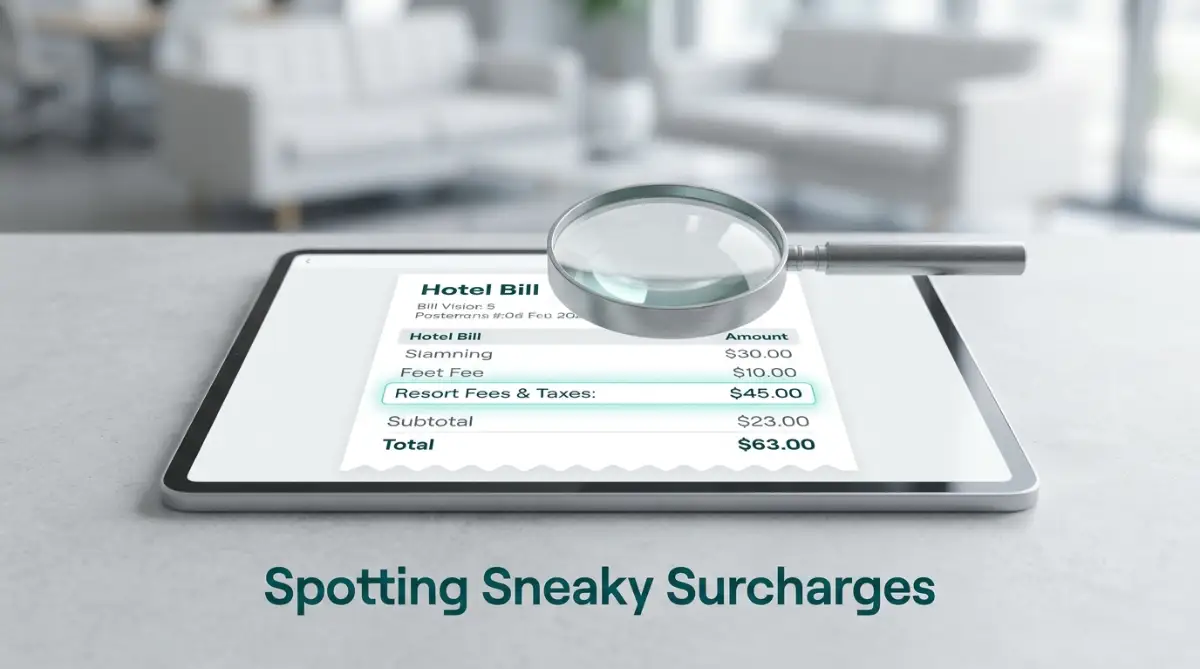
Then, an unexpected charge instantly ruins your entire travel budget and your hard-earned peace of mind. Instead of kicking off your shoes and relaxing, you find yourself furiously arguing with a hotel manager about rules you never knew existed.
The sheer anxiety of not knowing the true final bill can ruin the anticipation of a well-deserved break. It feels incredibly unfair when you are actively trying to be financially responsible with your family savings.
Everyday families are forced to skip dinners or cancel fun excursions just to cover these surprise lodging costs. This kind of financial ambush completely destroys the mental relaxation that a vacation is supposed to provide in the first place.
You deserve to know exactly where your money is going before you ever pack your bags. We all work way too hard to let sneaky booking tactics drain our bank accounts.
Understanding the Illusion of Cheap Online Rates
To protect your wallet, we first need to understand exactly how travel websites present their pricing. When you search for a room, most platforms default to showing you the absolute lowest base rate possible.
This base rate is essentially a magnet designed to grab your attention away from competing websites. It looks amazing on the search results page, making you feel like you just found the deal of a lifetime.
However, this initial number almost never includes the mandatory extras that the property will force you to pay later. The industry actually calls this tactic "drip pricing," where extra costs slowly drip into your cart as you click through the checkout process.
By the time you reach the final confirmation page, you are already emotionally invested in the trip. Most people just sigh and accept the higher price because they are too tired to start their search all over again.
The Most Common Sneaky Charges to Watch For
The most famous budget destroyer in the travel world is the dreaded "resort fee" or "destination fee." Properties use these terms to charge you extra for amenities that used to be completely free, like swimming pool access or gym usage.
Even if you never step foot in the gym or swim in the pool, you are still legally required to pay this daily charge. These fees can easily add an extra thirty to fifty dollars per night to your total bill.
Another major trap is the hidden parking surcharge. You might find a great deal on a downtown room, only to discover that parking your rental car costs an additional forty dollars every single day.
Wi-Fi charges are also making a frustrating comeback at certain high-end properties. While budget motels usually offer free internet, luxury properties sometimes charge a premium daily rate just to connect your phone to their network.
If you want a visual breakdown of exactly where these sneaky charges hide on popular booking sites, this quick walkthrough is a must-watch.
Practical Steps to Expose the True Cost
Now that we know how the trap works, we can take highly specific steps to avoid falling into it. The very first rule of smart travel planning is to completely ignore the bold, oversized price on the initial search page.
Instead, you need to train your eyes to look for the tiny text usually hidden right below the main price. Booking platforms are legally required to state if taxes and additional fees are included, but they make this text as small as possible.
When you find a room you like, click all the way through to the final payment screen before making a decision. This final page is the only place where the platform is forced to calculate the actual total cost of your stay.
Compare this final, fully loaded price across two or three different travel websites. You will often find that the site with the cheapest initial base rate actually has the most expensive final checkout price.
I always remember make it a habit to pick up the phone and call the front desk directly before finalizing any online payment. By simply asking if the quoted online price includes absolutely everything, I have saved hundreds of dollars on surprise destination fees.
The Power of Direct Property Negotiations
Many travelers completely forget that online travel agencies are essentially middlemen taking a cut of the transaction. Properties have to pay heavy commissions to these websites for every single reservation made through them.
Because of this, hotel managers actually prefer it when you book directly with them. If you find a room online, go to the official website of that specific property and check their direct rates.
Sometimes, the direct website will clearly state that they waive resort fees for guests who book straight through them. If the direct website is slightly more expensive, you can use a very simple phone script to negotiate.
Call the property and politely explain that you found their room on a third-party site for a specific price. Ask them if they can match that final price while guaranteeing no surprise fees upon arrival.
More often than not, the reservation agent will gladly match the price just to avoid paying the middleman commission. This direct relationship also puts you in a much better position to request room upgrades or early check-ins without extra charges.
Myth vs Reality: Online Travel Agencies
The Myth: Using massive online search platforms is In many cases the best way to secure the absolute lowest total price for your vacation.
The Reality: These platforms are fantastic research tools for finding available properties, but they often mask mandatory local taxes and property-specific charges to make their deals look artificially sweeter.
This difference between perception and reality is exactly why so many consumers feel scammed at the checkout counter. You have to treat these search engines as discovery tools, not necessarily as the final place to swipe your credit card.
Spotting the Incidental Hold Trap
There is another invisible cost that catches many budget-conscious travelers completely off guard. This is known as the "incidental hold," and it can seriously mess up your available cash flow during your trip.
When you check in, the front desk will consider ask for a credit card for "incidentals" like room service or damages. They don't just write your number down; they actually freeze a specific amount of money on your card.
This hold can range from fifty dollars to over two hundred dollars per night, depending on the property's internal rules. If you are using a debit card, this money is actively removed from your checking account until a few days after you check out.
Imagine arriving on a Friday with a strict spending budget, only to have three hundred dollars frozen and completely inaccessible. To avoid this stressful scenario, you must read the property's deposit policy before you arrive.
You can often find this information hidden in the "Policies" or "House Rules" section at the very bottom of the online listing. If it is not clearly listed, send a quick email to the property asking exactly how much they hold for incidentals per night.
Utilizing Price Transparency Filters
Technology can sometimes be part of the problem, but we can also use it as part of the solution. Some specific travel search engines have finally started listening to consumer complaints about fake pricing.
When you are browsing for rooms, always look for a filter or toggle switch labeled "Show total price." Clicking this button forces the algorithm to immediately calculate taxes and known extra charges right on the main search page.
This simple toggle completely changes the order of the search results. Properties that rely heavily on hidden resort fees will suddenly drop down the list, revealing the truly honest and affordable options.
You should also read recent customer reviews specifically searching for the word "fees" or "surprises." Previous guests are usually very vocal about feeling scammed, and their angry reviews are your best warning system.
If you see multiple reviews complaining about mandatory valet parking or mandatory breakfast charges, take your business elsewhere. There are plenty of honest businesses out there that respect their customers with clear, upfront pricing.
Comparing Your Options Side-by-Side
To really drive this point home, let us look at a simple breakdown of how prices change depending on how you look at them. This happens every single day to travelers who are rushing through the booking process.
As you can clearly see, jumping at the lowest initial number usually results in paying the highest final bill. Taking just five extra minutes to compare the total costs will always protect your wallet.
Always remember that as a consumer, your money is your most powerful voice. When we actively avoid properties that use deceptive pricing tactics, we send a strong message to the entire hospitality industry.
Booking a room should be a fun and exciting part of planning your journey, not a stressful math test. By slowing down, reading the small text, and verifying the total directly, you take complete control of your travel experience.
You will sleep so much better in that hotel bed knowing you paid a fair, honest price for your stay. And you will have plenty of extra money left over to actually enjoy the amazing destination you traveled so far to see.
Master-Level Strategies for Transparent Travel Pricing
Taking control of your travel budget requires a few smart, proactive habits that you can easily use every single time you plan a trip. One of the absolute best ways to shield yourself from unexpected surcharges is to build a relationship directly with the property brands you love.
Joining a hotel loyalty program is usually completely free, and it acts as an invisible shield against many common extra charges. When you have even a basic membership tier, many properties will instantly waive daily internet charges or early check-in fees just to keep you happy.
As you stay more often and build up your status, the perks become even more powerful. High-tier members frequently see those annoying daily resort surcharges completely wiped from their final bill as a simple "thank you" for their loyalty.
This is exactly why spreading your reservations across dozens of random booking sites is actually a bad long-term strategy. By focusing your stays on one or two main property families, you unlock a level of financial respect that casual online bookers never get to see.
Another incredibly effective strategy is taking timestamped screenshots of your entire checkout process. When you finally find a rate that clearly states "all taxes and fees included," take a picture of your screen before you hit the final confirmation button.
If a confused front desk agent tries to hit you with a surprise city tax upon arrival, you have concrete proof of your original agreement. Simply pulling out your phone and politely showing them the screenshot usually ends the argument immediately.
You can also leverage consumer protection laws if a business blatantly lies about their pricing online. According to recent guidelines from the Federal Trade Commission on fair pricing, businesses are increasingly being warned against using deceptive "junk fees" to trick consumers.
Knowing your rights gives you the confidence to stand your ground when a manager tries to invent a new mandatory charge. If they refuse to honor the agreed online price, you can always dispute the extra amount directly through your credit card company later.
Speaking of credit cards, using your bank's dedicated travel portal can sometimes offer an extra layer of protection. Premium credit card portals often negotiate special rates that explicitly include all mandatory property charges upfront.
Just like you carefully map out your itinerary, you need to map out your booking strategy with a trusted financial platform. If you are already researching great personal finance strategies, applying those same careful budgeting skills to your vacation planning is a natural next step.

The Most Expensive Booking Errors Travelers Keep Making
Even with the best intentions, it is incredibly easy to make a simple mistake that ends up costing you a small fortune. One of the biggest traps people fall into is the tempting "Pay at Property" option offered by massive search engines.
This button feels safe because you do not have to hand over your cash right away. However, choosing this option often means you are completely exposing yourself to currency exchange rate fluctuations and entirely new local taxes that were not calculated on the booking date.
By the time you actually arrive a few months later, the local tourism tax might have increased, or the property might have introduced a new daily parking rule. Because you did not lock in a prepaid, all-inclusive rate, you have absolutely no choice but to pay whatever they demand at the counter.
Another painful mistake is completely ignoring the recent customer reviews section. Many travelers just look at the shiny, highly edited photos of the swimming pool and completely skip reading what previous guests actually experienced.
If a business is currently running a deceptive pricing scheme, angry customers will always leave a trail of warning signs in the newest reviews. If you see multiple people mentioning the phrase "surprise charge" or "deposit not returned," you need to run away immediately.
People also make the mistake of assuming that "non-refundable" automatically means "no extra charges." You might choose the strictest, most inflexible booking option just to save twenty dollars on the nightly rate.
Then, you show up and realize that the cheap non-refundable rate actually excludes the mandatory daily destination charge. Now you are stuck paying the fees anyway, and you have lost the ability to cancel the trip if your plans change.
This feeling of being trapped is very similar to the panic you feel when dealing with sudden airline issues. Just as you would carefully learn how to handle a cancelled flight booking without losing money, you must be equally vigilant about securing a refundable, transparent lodging reservation.
Many travelers also forget to factor in the hidden cost of location convenience. Booking a room ten miles away from the city center might look incredibly cheap on your screen initially.
However, once you add up the daily cost of rideshares, public transit, and the extra time spent commuting, that cheap room becomes a massive financial burden. Always calculate the true cost of getting around before you celebrate finding a suspiciously cheap nightly rate.
If you are planning a complex trip with multiple stops, this kind of hidden cost analysis becomes even more important. Learning how to book multi-city flights step by step can save you from overpaying on airfare, and you should apply that exact same extreme attention to detail when reserving your rooms.
Always remember that the cheapest option on a search page is very rarely the best value for your overall trip. True value means getting exactly what you paid for, without any sudden panic attacks at the checkout counter.
Your Blueprint for Stress-Free Vacation Planning
Taking charge of your travel plans does not have to be a complicated or stressful experience. It all comes down to slowing down, reading the fine print, and refusing to let deceptive marketing tactics pressure you into a quick sale.
Every time you search for a room online, remember to use those final checkout pages to uncover the real, completely loaded price. Do not let flashy red text telling you "Only 1 room left!" rush you into swiping your card before you verify every single line item.
Your money is a direct reflection of your hard work, and you get to decide which businesses deserve to earn it. When you actively choose properties that offer clear, upfront pricing, you are helping to make the entire travel industry a much better place for everyone.
You have the power to negotiate directly over the phone, leverage your loyalty status, and confidently ask for a breakdown of every single charge. This proactive mindset transforms you from an easy target into an educated, highly respected guest.
A vacation is meant to be a joyful escape from the daily grind, not a continuation of your financial worries. By applying these smart booking habits today, you are practically guaranteeing a much happier and more relaxing journey tomorrow.
I truly hope this guide helps you feel more empowered and confident the next time you sit down to plan a getaway. My biggest realization over the years is that taking just five extra minutes to verify the final bill can literally save a family enough money to pay for all their vacation meals.
Quick Notes: Avoid Hidden Hotel Booking Fees
- Compare the Final Price: Always review the total cost at checkout instead of relying on the advertised nightly rate, as taxes and extra fees are often added later.
- Read the Fine Print: Check the hotel's policies for resort fees, parking charges, Wi-Fi costs, and cancellation rules before confirming your reservation.
- Book Through Trusted Sources: Use reputable hotel websites or well-known booking platforms to reduce the risk of unexpected charges and misleading pricing.
- Watch for Optional Add-Ons: Extras such as breakfast, airport transfers, travel insurance, or room upgrades can increase your final bill if selected by default.
- Contact the Hotel if Unsure: If any fee seems unclear, contact the hotel directly before booking to confirm exactly what is included in the total price.
Common Questions About Sneaky Travel Surcharges
Can I legally refuse to pay a mandatory resort fee at the front desk?
If the fee was clearly disclosed in the terms and conditions when you booked online, you are legally bound to pay it. However, if the charge was completely hidden or you have proof it was not mentioned during checkout, you can politely refuse and ask for a manager to remove it.
Do online travel agencies refund hidden fees if I complain?
Most third-party booking sites will claim they are not responsible for local taxes or property-specific surcharges. They usually state in their fine print that all local charges are handled directly by the property, making it very difficult to get a refund from the search platform itself.
What exactly is a "destination fee" and why do hotels charge it?
A destination fee is simply a rebranded version of a resort fee, usually applied by properties located in major cities rather than beach resorts. It is a creative way for the business to inflate their profits by charging you for basic things like local phone calls, city maps, or lobby coffee.
How do I know if my incidental hold has been released?
The property usually releases the incidental hold on your credit or debit card on the exact day you check out. However, depending on your specific bank's processing times, it can easily take anywhere from three to seven business days for that money to actually reappear in your available balance.
Is it always cheaper to call the property directly to book?
Not always, but it provides the best opportunity to secure a fair, transparent deal. Even if their direct rate is identical to the online price, booking directly often gets you better room placement and a much lower chance of being hit with unexpected administrative charges.
What should I do if a property refuses to honor my online booking price?
If a manager insists on adding undisclosed fees, ask them to put the exact reason for the charge in writing on your final invoice. You can then pay with a credit card and immediately file a formal billing dispute with your credit card provider using the guidelines from the Consumer Financial Protection Bureau.
Do all-inclusive resorts have hidden fees too?
While all-inclusive packages cover your main meals and drinks, they can still hide extra costs in the fine print. You might arrive to find that premium alcohol, airport transfers, or specific water sports require a heavy extra daily charge, so before booking read the package details carefully.
Disclaimer: The information provided in this article is for educational and informational purposes only and does not constitute financial, legal, or professional travel advice. Hotel pricing policies, fees, and consumer protection laws change frequently. It helps to read the complete terms and conditions on the specific booking platform or property website before making any financial commitments or finalizing your travel plans.