Why Managing Online Learning Feels Like an Uphill Battle
I remember sitting on my bed during my first online semester, surrounded by empty coffee cups, staring at a blank screen at 2 AM. I had promised myself I would study all day, but somehow I wasted hours watching random videos instead. That overwhelming feeling of guilt and failure almost made me drop out of my classes entirely, which is exactly why I had to figure out a better way to survive.
We often start our online classes with high hopes. We believe that we will have more free time and enjoy the comfort of our homes. But then reality hits us hard.
You wake up later than you planned. Your phone screen glows with endless social media notifications. You sit on your bed with your laptop open, but your mind is somewhere else.
Within minutes, you find yourself scrolling through random videos. The entire afternoon slips away before you even write a single line of notes. Suddenly, it is midnight, and you are left feeling guilty and exhausted.
This toxic cycle repeats day after day. It makes you feel like you are falling far behind everyone else. It is a quiet struggle that many online students face but rarely talk about. Many online learners struggle because they follow advice that does not match their lifestyle. Let us look at the key reasons why common solutions fail:
- Using generic planners: Most pre-made templates do not fit your personal daily commitments.
- Planning too many hours: Students often try to study for six hours straight without taking breaks.
- Ignoring body energy: People schedule their hardest academic subjects when they feel sleepy.
- Following extreme routines: Trying to wake up at 4 AM when you are naturally a night person rarely works.
- Focusing on tools: Spending hours buying fancy notebooks instead of actually doing the required reading.
This ongoing cycle of planning and failing hurts your mental peace in a big way. Here is how it damages your academic journey:
- Constant self-doubt: You stop believing that you can finish your homework on time.
- High daily anxiety: The fear of approaching deadlines makes it hard to relax with family.
- Total brain fatigue: Your mind feels tired from always thinking about what you should be doing.
- Loss of interest: You slowly start to dislike the subjects you once loved to learn.
I have talked to many students who felt completely lost in virtual school. They felt like they were drifting in a large ocean without a map.
This does not happen because you are lazy or lack intelligence. It happens because you do not have a strong structure. In a traditional school, physical bells and classrooms keep you on track. At home, those helpful boundaries do not exist.
You have to build those boundaries by yourself. Without them, your academic life and personal life blend into a messy routine.
This confusion creates a stressful environment that stops you from learning. We need to fix this issue from the root. Let us build a reliable system together that supports your brain and your goals.
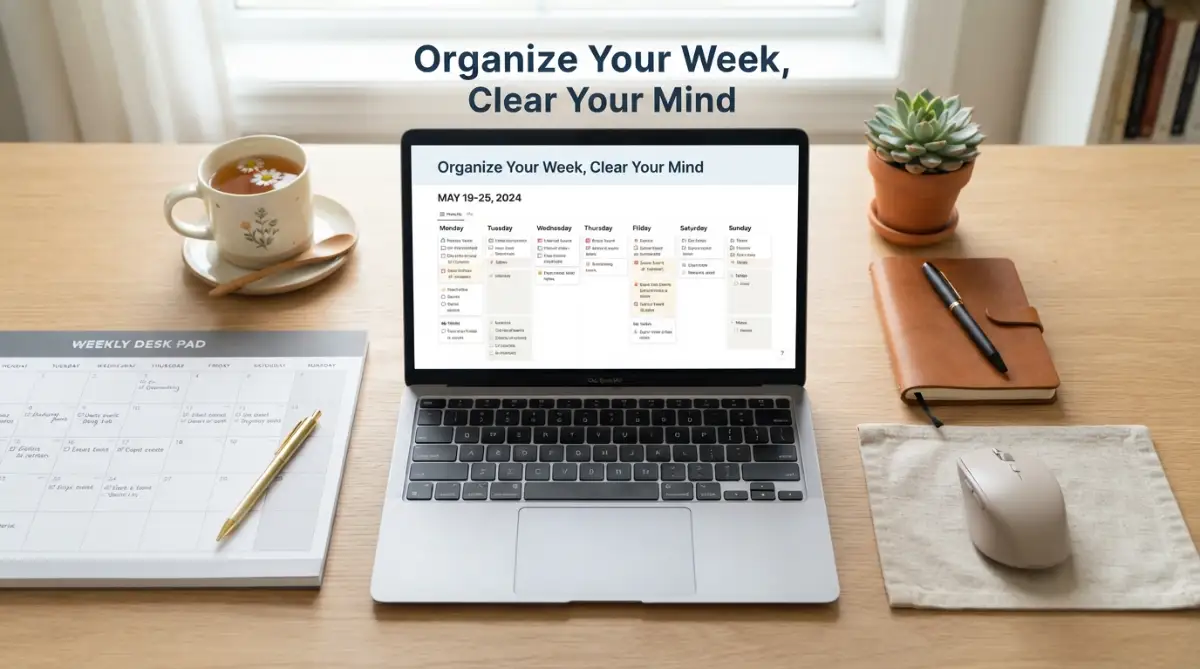
The Practical Guide to Structuring Your Virtual Study Day
Step 1: Track and Map Your Energy Levels
To build a plan that works, you must first understand your body. Not all hours of the day are equal for your brain.
Some people are highly alert in the morning. Others find their deep focus late at night.
Your circadian rhythm controls when you feel awake and when you feel sleepy. If you try to study tough science subjects during an energy dip, you will struggle. Spend three days tracking how you feel throughout the day. Write down your energy levels on a scale of 1 to 10 every hour.
Note when you feel sharp and when you feel sluggish. Do this from the moment you wake up until you go to sleep. Once you have this data, protect your peak hours. Use your high-energy hours for your most difficult online classes.
Save your low-energy hours for simple tasks. This includes replying to student emails or organizing your computer files. Think of yourself like a professional athlete. They do not train hard when they are physically exhausted.
They train when their bodies are ready to perform. Treat your brain with the same level of respect.
If you are tired of losing focus at home, watch this quick video below to see exactly how top students plan their daily schedules. After watching, keep reading below the video to discover the step-by-step methods you can use to protect your mental energy and get better grades!
Step 2: Use Time-Blocking Instead of Long Lists
Simple lists of tasks can sometimes act as a mental trap. They tell you what to do, but they do not tell you when to do it.
A long list of chores often leads to feeling overwhelmed. This makes you put off your work until later. Instead, you should try a method called time-blocking. This means you assign a specific block of time to a single study goal.
For example, you can block 9:00 AM to 10:15 AM for your history essay. During this block, you only work on that specific essay. Do not check your phone or open other browser tabs. Keep your focus locked on that single goal.
This simple method prevents context switching. Context switching happens when you jump quickly from one task to another.
It drains your brain power very fast. It leaves you feeling tired without getting any real work done. Start with small, manageable blocks of time. A block of 45 minutes of deep focus is a great starting point.
After that block, take a short break to stretch your legs. This keeps your mind fresh and ready for the next block.
Step 3: Set Up a Quiet Study Zone
Your physical environment has a direct impact on how you think. If you study in bed, your brain thinks it is time to sleep.
If you sit on a comfortable couch, you might feel too relaxed to write. Your brain associates places with specific actions. You need to establish a dedicated study space. It does not need to be a large home office.
A small desk in the corner of your room works perfectly. Keep this specific space clean and free of clutter.
Only keep the tools you need for your current study session on the desk. Place your phone in another room or inside a drawer. This setup creates a helpful psychological trigger. When you sit in this chair, your brain knows it is time to work.
It acts like a light switch for your daily focus. It helps you get into a workflow much faster. Tell your family or roommates about your study zone. Let them know that when you sit there, you should not be disturbed.
Setting these gentle boundaries keeps your study time private and respected. It makes a massive difference in your daily progress.
I used to make the terrible mistake of trying to write my essays while sitting on my soft living room couch. I quickly realized my brain naturally associated that couch with watching movies, so I would feel sleepy within twenty minutes. Moving my laptop to a tiny, dedicated desk in the corner of my room was the single best thing I did to instantly double my focus.
The Power of Active Recovery Breaks
Let us talk about what you do when you take a break. A break is not just about stopping your schoolwork.
It is about recharging your mental battery. Many students make the mistake of looking at social media during their breaks. This is actually a bad idea for your mind. Your brain is still processing the information you just read.
Staring at another screen does not allow your mind to rest. It keeps your brain active and tired.
Instead, try using active recovery during your breaks. Walk to the kitchen to drink a refreshing glass of water. Do some light physical stretching on the floor. Look out the window at trees or the sky.
This gives your brain a real chance to organize new ideas. It is like letting a sponge absorb water slowly. If you pour water too fast, it simply spills over the edges. Your brain works in the exact same way.
A Quick Laugh for Online Students:
I asked my friend how his new online study schedule was going. He smiled and said he had already mastered the most important part of the daily routine.
I asked him which part that was. He replied, "The part where I schedule a two-hour nap right after opening my very first browser tab!
How Sarah Reclaimed Her Academic Routine
Let us look at a real-life scenario of a student named Sarah. Sarah was taking three online courses at a local college. She used to sit at her dining table all day with her laptop open. She felt like she was working from morning until night.
Yet, she was always late with her class assignments. She decided to change her approach entirely. First, she mapped her energy and found she was sharpest in the morning. She blocked 8:30 AM to 11:30 AM for her hardest reading.
Second, she moved her study desk away from the noisy living area. She left her smartphone in the kitchen during those morning hours. She also took a five-minute walk outside after each study block. In less than two weeks, her daily anxiety dropped.
She began finishing her assignments two days before the actual deadlines. Her test grades improved because her mind was fully rested and focused.
In the first part of our guide, we covered the basics of tracking your energy and organizing your space. Now, let us look at some highly advanced methods that top academic performers use every day. These strategies will help you stay on track even on your most difficult days.
According to research by Harvard University, our brains can only hold a small amount of active information at one time. Therefore, we must use smart systems to protect our mental energy from draining too fast.
The U.S. Department of Education often points out that online students need strong self-management skills to succeed. Let us explore the exact habits that will help you build those exact skills. So learn every day if you update regularly yourself.
How to Build Unshakeable Routines with Habit Stacking
Habit stacking is a simple method where you pair a new study habit with an action you already do every day. For example, think about your morning cup of coffee or tea. You already make this hot drink every single morning without thinking about it.
You can stack your new study routine directly onto this existing morning habit. You can tell yourself: "As soon as I sit down with my hot tea, I will open my school dashboard." This simple trigger takes away the stress of deciding when to start your work.
This works because your old habit is already wired into your brain as a strong path. By linking the new task to the old one, you do not need to use as much willpower. It makes starting your online classwork feel completely natural over time.
Use Smart Digital Tools to Protect Your Focus
Your computer can be a great learning tool, but it is also full of easy distractions. To fight these distractions, you should use modern technology to protect your study time. You can install simple browser extensions that block distracting news or social media websites.
Most modern smartphones now have a built-in focus mode that blocks incoming notifications. You can set this mode to turn on automatically during your blocked study hours. This ensures that you will not get distracted by a sudden text message or app alert.
Protecting your study hours from digital notifications is incredibly important. Think of your daily attention span as a highly valuable asset, much like taking easy security steps to secure your crypto wallet from unwanted access online.
How to Maintain Your Study Routines for Many Months
Creating a schedule is easy, but keeping it going for a whole semester is the real challenge. To maintain your success, you must review your study calendar at the end of every week. Spend ten minutes on Sunday evening to see what worked well and what failed.
If you notice that you missed several afternoon sessions, change your plan for the next week. A great schedule is not a rigid set of rules that you can never change. It is a flexible tool that should grow and change with your changing life.
Staying consistent with study habits is very similar to running a small business. Many students quit their online classes early because they lose steam, which is a pattern similar to why bootstrapped startups collapse early and cash flow fixes due to poor long-term planning.
Be patient with yourself when you make mistakes or miss a planned study block. No student is perfect, and you will have days when your schedule falls apart completely. The key is to simply restart your routine the very next morning without feeling guilty.

Common Traps That Can Ruin Your Study Schedule
Many students struggle with virtual learning because they fall into easy, invisible traps. Knowing these common mistakes will help you protect your grades and save your energy. Let us look at the top errors that you should avoid at all costs.
1. Trying to Build a Flawless Schedule
Some students spend days creating beautiful, color-coded study planners. They try to plan every single minute of their day from morning until night. This rigid approach actually backfires when an unexpected event occurs. Without learn you can not earn.
If you miss one block because of a family task, your whole week feels like a failure. This often leads to giving up on your schedule completely. Instead of a rigid plan, always leave empty blocks for unexpected tasks or extra rest.
2. Studying in a Noisy and Busy Room
Trying to read complex textbook chapters while sitting in front of a television is a major mistake. Even if you think you are ignoring the noise, your brain is still trying to process it. This split focus cuts your learning efficiency in half.
Do not ignore these small gaps in your study environment. You need to inspect your daily work area for small issues, much like checking for major warning signs to spot in a home inspection before they turn into huge problems.
3. Taking on Too Many Tasks at Once
When you build your learning schedule, do not take on more tasks than you can actually handle. Managing your daily to-do list is a life skill, very similar to learning how to lower your debt-to-income ratio before a mortgage application to avoid financial overload.
If you fill your schedule with too many assignments, your brain will quickly burn out. It is always better to plan fewer tasks and complete them with high quality. Keep your goals realistic so you can build your confidence day by day.
4. Skipping Your Scheduled Recovery Breaks
When a major deadline is close, you might feel tempted to study for hours without stopping. This is a bad strategy that actually lowers your comprehension levels. Your brain needs regular breaks to absorb and organize new knowledge properly.
If you skip your breaks, your focus will drop rapidly after the first hour. You will spend more time reading the same page over and over again. Always take five minutes to stretch or drink water every hour.
5. Studying Late into the Night
Many online students stay up until 3 AM to finish their class assignments. While this might help you finish one task, it ruins your energy for the next day. A lack of sleep directly hurts your memory and makes you feel highly anxious.
Try to keep your study sessions during daylight hours whenever possible. This aligns with your natural energy levels and helps you get high-quality sleep. A well-rested brain is always your best learning tool.
Your Path to Academic Freedom and Less Stress
Taking online classes does not mean you have to live a chaotic and stressful life. By building a simple, energy-based study routine, you can take complete control of your academic journey [1]. You will finally have time for both your studies and your personal hobbies.
Remember that building these new habits takes time and patience. You do not need to change your entire life overnight. Start by tracking your daily energy levels and setting up a clean study corner today.
Small, consistent actions every day lead to massive academic success over time. Think of your schedule as a helpful guide, not a strict set of rules. I believe that you have the power to master your time and enjoy learning again.
Do not wait for the next school semester to start organizing your life. Open your calendar right now and block out just forty-five minutes for your hardest subject. Take that first small step today, and watch your stress melt away.
Short Notes:
01. Set Clear Weekly Learning Goals
Break your coursework into small, realistic weekly targets to stay organized, reduce stress, and maintain steady progress throughout your online classes.
02. Study at the Same Time Every Day
Create a consistent study routine that matches your most productive hours. A regular schedule improves focus, builds discipline, and prevents procrastination.
03. Use Time Blocking for Better Focus
Divide your day into dedicated study sessions with short breaks. Time blocking helps manage multiple subjects while keeping your workload balanced and efficient.
04. Track Your Progress and Adjust Your Plan
Review your study schedule each week, mark completed tasks, and make changes when needed. A flexible plan is easier to follow and delivers better long-term results.
05. Reduce Distractions During Study Sessions
Choose a quiet workspace, silence unnecessary notifications, and keep only essential learning materials nearby to improve concentration and increase productivity.
Finding my perfect study rhythm did not happen overnight, but taking that first step gave me my free time and happiness back. I know how stressful and lonely online learning feels right now, but trust me, setting up just one small block of focused time today will completely change your mood. You absolutely have the power to turn this around and actually enjoy your classes again.
Disclaimer:
The information provided on this website is for educational and general informational purposes only. We strive to provide useful advice to help students improve their habits, but study patterns can vary based on individual needs and course structures. For official academic counseling, please consult your educational institution’s advisors. For any linked financial advice (such as mortgage planning or debt ratios), please consult a licensed financial professional.