Why Dirty Solar Panels Are Costing You Money (And How Bad Cleaning Ruins Them)
A few years ago, I needed to clean my solar panels but worried that one wrong move might scratch the glass. Instead of rushing in with the wrong tools, I took the time to learn the safest cleaning method. That decision protected my panels and helped them perform better over time. If you want to clean solar panels safely without scratching them, this guide will show you exactly how.
You bought your solar panels to save money on your monthly electricity bills. It felt great to watch your power meter run backward and know you were making a smart financial choice.
But over time, you look up and notice a dark layer of dust, yellow pollen, and dark bird droppings covering the glossy glass. Your green energy system looks dirty, and you can see that your daily power production is starting to fall.
You want to clean them, but you feel completely stuck and worried. You are afraid that one wrong move will scratch the expensive glass and ruin your investment forever.
- The Soap Trap: Many websites tell you to use regular dish soap, but this leaves a thin, sticky film that actually attracts more dirt.
- The Sponge Mistake: People often grab kitchen sponges with green abrasive backs, which can micro-scratch the anti-reflective glass coating in seconds.
- The Thermal Shock Risk: Spraying cold water on hot panels under the midday sun can cause the tempered glass to crack instantly.
- The Tap Water Problem: Using hard tap water leaves white calcium spots that block sunlight just as badly as the dirt did.
This problem can make you feel highly anxious every time you open your monthly energy bill. You feel a loss of control because you do not know who to trust or which method is truly safe.
- Financial Stress: Watching your energy savings drop while you hesitate to take action feels like throwing money away.
- Safety Concerns: The thought of climbing up a high ladder with heavy, wet tools makes you feel unsafe and stressed.
- Fear of Damaging Your Roof: You worry about voiding your manufacturer warranty by using the wrong cleaning tools.
- Wasted Time: Spending hours researching conflicting online advice leaves you feeling confused and exhausted.
The truth is that solar panels are tough, but their glass coatings are highly sensitive. You do not need to spend hundreds of dollars on professional cleaning services to keep them safe. You simply need a clear, gentle, and scientifically proven plan to get the job done without leaving a single scratch.
The glass on your solar panels is not like the glass on a standard home window. It has a specialized, micro-thin anti-reflective layer that helps the solar cells absorb as much light as possible. When you scratch this layer, you permanently reduce the ability of the cells to catch light.
These micro-scratches act like tiny mirrors, bouncing the sunlight away from the silicon cells inside. Once scratched, there is no way to polish the glass back to its original state. That is why we must focus on a gentle, low-pressure cleaning method that protects this sensitive surface.
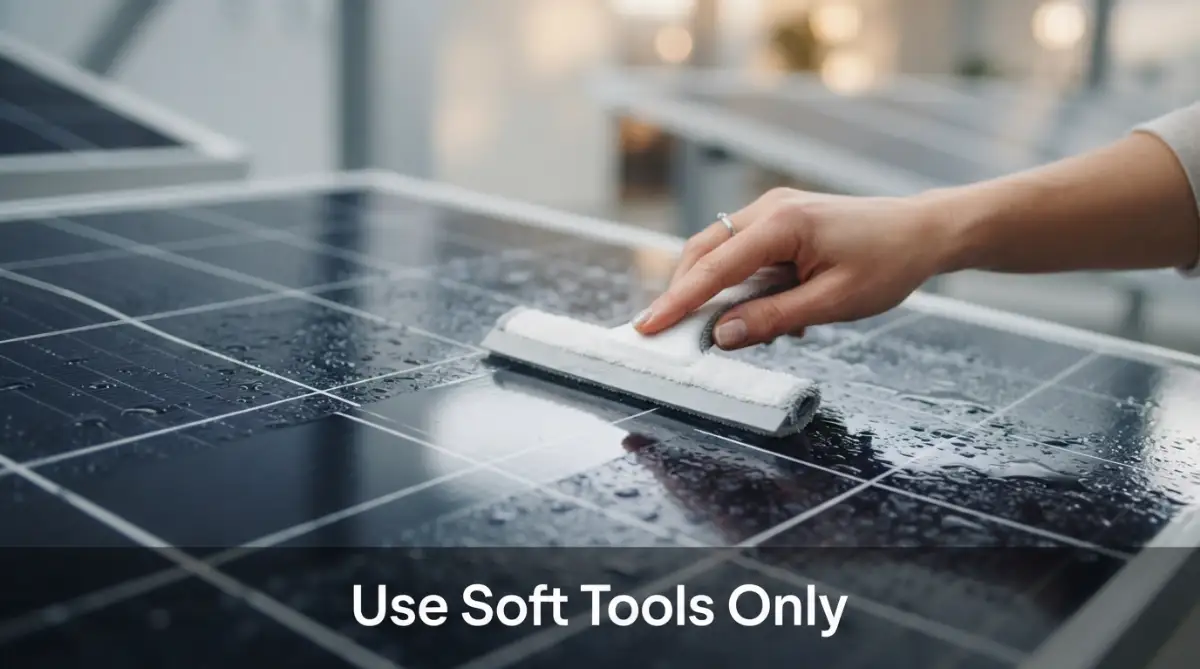
The Step-by-Step Guide to Scratch-Free Solar Cleaning
Keeping your solar investment in top shape does not require complex tools. We can achieve great results by following a simple, careful process.
Here are the first three steps to clean your solar panels safely and keep them running at peak efficiency.
Step 1: Choosing the Perfect Time and Weather Conditions
Timing is everything when it comes to solar maintenance. You must never clean your panels when they are hot.
Solar panels are made of tempered glass designed to absorb heat. On a warm day, the dark glass can easily reach temperatures above 150 degrees Fahrenheit.
If you spray cool water onto this burning hot glass, the sudden temperature drop creates intense physical stress. This stress can cause the glass to crack or shatter completely.
This physical reaction is called thermal shock. It is the exact same reason a hot glass baking dish cracks if you put it directly into cold water.
To avoid this risk, you should plan your cleaning session during specific times of the day.
Early morning is the absolute best time because the panels have cooled down overnight. The morning dew also helps soften any baked-on dirt or bird droppings.
Late evening is another good choice. Cleaning after the sun goes down ensures the glass is cool enough to handle cool water safely.
A fully cloudy day is also excellent because the panels never get hot, giving you plenty of time to work without the water drying too fast.
If the water dries too quickly under the sun, it will leave unsightly water spots. These spots block sunlight and reduce your system's efficiency, defeating the whole purpose of cleaning them.
Step 2: Gathering the Right Gentle Cleaning Tools
You do not need fancy chemical sprays to clean your solar panels. In fact, using harsh chemicals is the fastest way to ruin them.
Dust is mostly made of tiny silica particles, which are essentially microscopic rocks. If you use a dry cloth or a rough brush, you will drag these sharp particles across the glass.
This dragging motion creates micro-scratches. While you might not see these scratches immediately, they will slowly lower your daily energy output.
To keep your glass perfectly smooth, we want to use soft, clean tools that lift the dirt instead of scraping it.
Use a soft microfiber cloth. This tool lifts dirt away from the surface without scratching, unlike standard cotton rags or old towels.
Use a squeegee with a rubber edge. This removes water cleanly and prevents water spots, but you must avoid plastic-edged scrapers or metal squeegees.
Use a soft nylon solar brush. This gently scrubs away soft grime without harming the glass coating, unlike wire brushes or stiff-bristled brooms.
Use a standard garden hose. This delivers a gentle water flow, which is much safer than high-pressure power washers that can break the waterproof seals.
If you live in an area with hard water, your tap water contains high levels of calcium and magnesium. When this water evaporates, it leaves white mineral deposits behind.
Think of these deposits like the chalky buildup inside your tea kettle. If you have hard water, it is best to use distilled water or a simple water-softening filter attached to your garden hose.
For mild dust, pure water is all you need to get a beautiful, streak-free shine.
Step 3: Preparing the Panels with a Gentle Pre-Rinse
Never start scrubbing right away, even with a soft cloth. The loose dirt on the glass must be washed away first.
Imagine you have a beautiful car covered in dry mud. If you take a dry sponge and start scrubbing, you will ruin the paint.
The mud acts exactly like sandpaper. The same rule applies to your solar glass.
Always begin by rinsing the panels with a low-pressure stream of water from your garden hose. This gentle wash melts away loose dust, dry leaves, and soft pollen.
Bird droppings can be very sticky and hard to remove. If the pre-rinse does not wash them away, do not scrape them with your fingernails or plastic tools.
Instead, spray a little water directly onto the spot and let it sit for a few minutes. This allows the water to soak into the spot and soften it naturally.
Once the spot is soft, you can gently wipe it away with a wet microfiber cloth. This slow, patient method keeps your panels perfectly safe from scratches.
Understanding the Danger of Pressure Washers
Many homeowners think that using a pressure washer is a quick way to clean their roof. However, this is one of the most dangerous things you can do to a solar energy system.
The high-pressure stream of water can easily force its way past the rubber seals that protect the electrical components. Once water gets inside the junction box or under the frame, it can cause a short circuit.
This short circuit can destroy the panel or even create a fire hazard on your roof. Always stick to a standard garden hose with a simple spray nozzle set to a gentle shower mode.
How to Stay Safe While Cleaning Your Roof
If your solar panels are installed on a high roof, your personal safety must always come first. No amount of energy savings is worth a fall from a ladder.
If you can reach your panels from the ground using a long extension pole with a soft brush attachment, that is the safest option. Many high-quality solar brushes can extend up to twenty feet.
If you must climb onto your roof, always use a sturdy ladder placed on flat, solid ground. Wear slip-resistant shoes to prevent slipping on wet roof tiles.
It is also highly recommended to work with a partner who can hold the ladder and assist you if needed. If your roof is too steep or too high, do not risk your safety. In those cases, it is much better to call a professional cleaning team who has the proper safety harnesses.
Maintaining a Regular Cleaning Schedule
How often should you clean your solar panels? The answer depends heavily on your local climate and environment.
If you live in an area with frequent rain, nature will do most of the light cleaning for you. However, dry regions with lots of dust and wind will require more frequent attention.
Generally, cleaning your panels twice a year is enough to keep them performing at their best. Spring and autumn are the perfect seasons for this task.
Cleaning in the spring removes the winter grime and prepares your panels for the high-production summer months. Cleaning in the autumn clears away summer dust and fallen leaves before the winter sun arrives.
Keep an eye on your monthly energy production through your system's monitoring app. If you notice a sudden drop in power on a clear day, it is likely time for a gentle wash.
Advanced Methods for Stubborn Solar Grime
Cleaning light dust from your panels is simple, but sometimes you have to deal with tougher problems. Sticky tree sap, thick soot, and dried bird droppings do not always wash away with a simple rinse.
According to data from the U.S. Department of Energy, even a thin layer of dust can slowly reduce your system's overall solar output over time. To keep your panels running at their absolute best, you need to use smart, safe cleaning methods.
When you want to maintain maximum power generation, knowing how to handle stubborn dirt is just as important as knowing how to spot major warning signs to spot in a home inspection before buying a house. Both steps protect your property value and save you from unexpected repair bills.
We want to share some expert methods that will make your cleaning sessions much easier and completely scratch-free.
Step 4: Use the Natural Dew Trick for Effortless Cleaning
One of the best secrets used by professional solar cleaners is using natural morning dew to your advantage. You do not need to spray gallons of water to soften dried-on dirt if you use this natural timing method.
During the night, moisture in the air condenses on the cool glass of your solar panels. This creates a thick, even layer of wet dew that sits on the dirt for several hours.
This overnight soaking process naturally loosens tough bird droppings, sticky pollen, and baked-on dust. If you go outside right as the sun rises, you will find that the grime is already soft and ready to slide off.
All you need to do is use your soft rubber squeegee to wipe the wet panels clean. This clever trick saves water, prevents water spots, and reduces your overall working time by half.
Step 5: Make a Safe Home-Made Cleaning Solution
If you live near a main road or a dusty area, water alone might not be enough to cut through the greasy film of soot on your panels. According to studies by the National Renewable Energy Laboratory, atmospheric pollution can create a sticky layer on solar glass that resists simple rain washes.
In these cases, you can create a safe, non-toxic cleaning solution using simple household items.
- The Vinegar Solution: Mix one cup of standard white vinegar with one gallon of pure water. The natural acidity of vinegar breaks down tough mineral spots and greasy soot without harming the glass.
- The Baby Soap Mixture: Add just a few drops of mild, biodegradable baby soap to a bucket of warm water. Baby soap is highly gentle and does not contain harsh chemicals or artificial scents that leave sticky residues.
Never use standard dish soaps or laundry detergents on your solar panels. These soaps leave a micro-thin, sticky film on the glass that acts like a magnet for new dust.
Using the right cleaning solutions keeps your home running smoothly. Managing your household expenses and maintaining your home assets is a great way to save money, especially if you are working on how to lower your debt-to-income ratio before a mortgage application for your next big investment.
I learned this lesson the hard way when I once used a heavy-duty dish soap on my panels, only to watch them get twice as dirty just a week later because of the sticky soap film. Now, I always stick to a tiny drop of gentle baby soap, and it keeps the glass incredibly clean and clear for months without attracting new dust.
Long-Term Tips for Effortless Solar Maintenance
The best way to keep your solar panels clean is to make the job easier for yourself in the future. By taking a few simple steps around your yard, you can cut down on the amount of dirt that lands on your roof.
First, keep nearby tree branches trimmed back. Overhanging branches are a primary source of falling leaves, sticky tree sap, and bird droppings.
Trimming these branches also reduces the risk of limbs falling on your panels during a storm. Additionally, it prevents shade from blocking your solar cells during the day.
Second, check the tilt angle of your solar panels. If your panels are installed at an angle of fifteen degrees or higher, they will mostly clean themselves during heavy rainstorms.
However, if your panels are flat or have a very low tilt, water will pool in the corners and leave dirty rings when it evaporates. For flat installations, you will need to perform manual squeegee cleanings more frequently to prevent these muddy spots from blocking light.
Protecting these valuable home systems from damage is essential for your long-term wealth, just like learning easy security steps to secure your crypto wallet is necessary to protect your digital money. Both tasks require a little bit of regular attention to prevent huge financial losses later.
Costly Mistakes That Can Destroy Your Solar System
It is easy to make mistakes when you try to clean your solar panels for the first time. Many well-meaning homeowners end up causing permanent damage to their systems because they do not know the risks.
To help you protect your investment, we have listed the five most common errors people make and how to avoid them.
Mistake 1: Using High-Pressure Power Washers
It is tempting to blast away roof dirt with a power washer, but this high pressure is highly dangerous for solar panels. The force of the water can easily break the waterproof silicone seals around the aluminum frame.
Once these seals are broken, water will seep into the delicate electrical wiring beneath the glass. This can lead to corrosion, system failure, and expensive replacement costs that are not covered by your warranty.
Mistake 2: Scraping with Metal Blades or Hard Brushes
When bird droppings do not wash away easily, some people try to scrape them off with a metal putty knife, a razor blade, or a wire brush. This is a guaranteed way to scratch the glass.
These scratches permanently scatter sunlight and reduce your system's efficiency. Always let water soak the dried spots to soften them naturally instead of scraping them.
Mistake 3: Cleaning Hot Glass Under the Midday Sun
As we explained earlier, spraying cold water on hot panels causes thermal shock. This can make the tempered glass crack into thousands of tiny pieces instantly.
Always clean your panels in the cool morning, late evening, or on a fully cloudy day. This simple habit keeps your glass completely safe from sudden cracking.
Mistake 4: Standing or Walking on the Solar Panels
Never stand, sit, or step on your solar panels while cleaning them. Even though the tempered glass is strong, the weight of a human body can create micro-cracks in the silicon cells below.
These micro-cracks are completely invisible to the naked eye, but they will slowly burn out over time and ruin your panel's power output. Always use an extension pole to reach the panels safely from a ladder or from the ground.
Mistake 5: Using Chemical Glass Cleaners or Bleach
Harsh chemical sprays like window cleaners, bleach, or ammonia can strip away the delicate anti-reflective coating on the glass. Once this coating is gone, your panels will reflect more sunlight instead of absorbing it.
Stick to pure water, mild vinegar mixtures, or biodegradable baby soap to keep the glass clean and safe.
Managing your home maintenance budget wisely is just as important as knowing why bootstrapped startups collapse early and cash flow fixes when managing a growing business. Avoiding these simple mistakes ensures you do not waste your hard-earned money on avoidable repairs.
Before you grab your cleaning tools, watch this quick demonstration to see exactly how high-pressure water can impact your solar system. This short clip will show you the correct way to wash your panels safely and help you avoid a very costly mistake.
Your Action Plan for Bright and Shiny Solar Energy
Keeping your solar panels clean does not have to be a stressful or difficult chore. By using the right timing, gentle tools, and a little bit of patience, you can safely wash away the dirt and keep your energy savings high.
Remember to plan your cleaning sessions for the early morning when the panels are naturally cool and covered in damp dew. Use soft microfiber cloths, a rubber-edged squeegee, and a gentle stream of water from your garden hose.
By avoiding harsh chemicals and high-pressure washers, you protect the sensitive glass and preserve your valuable manufacturer warranty.
Now is the perfect time to step outside and look up at your roof. Take a few minutes to inspect your panels, look for any dust buildup, and plan your next gentle morning clean.
Your solar panels work hard every day to power your home and save you money. With just a little bit of regular, scratch-free care, you can enjoy clean, independent green energy for many decades to come.
Taking care of my own solar panels has not only saved me thousands of dollars, but it has also given me a wonderful sense of pride in maintaining my own home. I promise you that once you complete your first safe clean and see those power numbers jump back up on your app, you will feel completely confident and ready to handle it yourself every single time.
Key Takeaways:
- Use Soft Cleaning Tools: Always use a soft microfiber cloth or a non abrasive sponge to avoid scratching the protective glass surface.
- Clean During Cool Hours: Wash solar panels early in the morning or late in the evening when they are cool to reduce the risk of thermal stress.
- Avoid Harsh Chemicals: Plain water or a mild, non abrasive soap solution is usually enough to remove dust, pollen, and bird droppings safely.
- Stay Safe While Cleaning: If your panels are installed on a steep or high roof, use proper safety equipment or hire a professional instead of taking unnecessary risks.
- Inspect While You Clean: Look for cracks, loose wiring, or damaged mounts so you can address small issues before they become expensive repairs.
Frequently Asked Questions:
Before you finish, here are answers to some of the most common questions homeowners ask about cleaning solar panels safely. These quick answers will help you avoid common mistakes and keep your panels performing at their best.
1. How often should I clean my solar panels?
Most homeowners only need to clean their solar panels every 6 to 12 months. If you live in a dusty area or near trees, you may need to clean them more often.
2. Can I use dish soap to clean solar panels?
Yes, but only a small amount of mild, non-abrasive dish soap mixed with water. Avoid harsh chemicals, ammonia-based cleaners, or abrasive detergents.
3. What should I never use on solar panels?
Avoid wire brushes, rough sponges, abrasive scrubbers, high-pressure washers, and strong chemical cleaners because they can scratch the glass or damage protective coatings.
4. Is it safe to walk on solar panels while cleaning?
No. Walking on solar panels can crack the glass, damage the frame, and may void the manufacturer's warranty. Clean them from a safe position or use an extension tool if needed.
5. Does cleaning solar panels really improve performance?
Yes. Removing dust, pollen, bird droppings, and other debris allows more sunlight to reach the solar cells, which can improve energy production, especially if the panels are heavily soiled.
Disclaimer
The information provided in this guide is for educational purposes only. Working on roofs and near electrical solar energy systems involves physical risks. Always put personal safety first, use proper ladder safety gear, and consult a professional technician if your panels are located on a high or steep roof. The author is not responsible for any damage or injury caused by attempting these cleaning