

Reading Time: 12 Minutes
Difficulty Level: Beginner to Intermediate
Reviewed By: FinanceInfoIn Editorial Team
The Silent Dream Killer: How Unseen Debt Keeps You From Your Dream Home
Years ago, I sat in my cramped apartment holding a mortgage rejection letter that felt like a punch to the stomach. My credit score was decent, and I had saved every spare penny, but my high debt-to-income ratio stood in my way. I felt embarrassed and completely defeated, realizing my dream of homeownership was slipping away because of numbers I did not even know how to calculate. That painful moment taught me exactly what it takes to rebuild your financial story from scratch.
Imagine walking through a beautiful suburban house with a green front yard. You can already see your family in the living room and hear the laughter of your children in the hallway. You feel excited because you worked hard for years to save up a down payment for this moment.
But then, a cold letter from the bank arrives in your mailbox. Your home loan application has been rejected not because of your credit score, but because of a high debt-to-income ratio. This painful situation is a common reality for thousands of hopeful home buyers every single day.
Many people feel completely lost when they try to fix this financial issue on their own. The internet is filled with conflicting advice that often makes the situation worse instead of helping you move forward.
The Web of Misinformation: Why Simple Solutions Often Fail
- Many online articles tell you to pay off all your debts instantly. This is highly unrealistic for normal working families who do not have large piles of spare cash sitting in the bank.
- People often close their old credit card accounts thinking it will show lenders they do not use credit. In reality, doing this can actually hurt your credit history and lower your credit score.
- Some self-proclaimed experts tell you to focus only on your credit score. They completely ignore the fact that banks look much more closely at your actual monthly cash flow than just a three-digit credit number.
- You might try to hide your small debts during the application process. Lenders will always find these hidden debts during their deep background check, which can lead to an immediate rejection.
The Hidden Emotional Cost of Loan Rejections
- Getting rejected for a home loan can make you feel like a personal failure. It brings a massive amount of stress to your marriage and causes sleepless nights for your family.
- You begin to feel trapped in an endless cycle of paying rising rent prices. Your hard-earned money goes toward paying off someone else's mortgage instead of building your own wealth.
- The constant worry about your financial future drains your daily energy levels. It makes you feel helpless and stuck in a place where you cannot provide a permanent home for your loved ones.
Lenders do not look at you as a living person with a dream. They look at you as a set of risk percentages on a computer screen. Your debt-to-income ratio is a simple comparison that measures how much money you pay toward debts each month against how much you earn.
If too much of your monthly income goes toward paying off old debts, lenders worry you cannot afford a new mortgage. They fear you might miss your monthly home loan payments when times get tough.
Thankfully, this is not a permanent mark on your record that you cannot change. It is a simple math puzzle that you can solve with the right step-by-step strategies. Let us look at how you can fix these numbers and show the bank that you are a highly safe and responsible borrower.
The Blueprint to Lowering Your DTI (And Getting That 'Approved' Letter)
Fixing your debt-to-income ratio does not require a lottery win. It requires strategy. Here are the practical steps you can take today to flip your rejection into an approval:
1. Calculate Your DTI Like a Banker
Before you can fix the problem, you need to know your exact numbers. Add up all your fixed monthly debt payments (credit cards, car loans, student loans, personal loans). Do not include groceries, utility bills, or health insurance—lenders only care about actual debt. Divide that total by your gross monthly income (your income before taxes). Multiply by 100. If your number is above 36-43%, you have work to do.
2. Attack the "Monthly Minimums," Not Just the Total Balance
Lenders calculate your DTI based on your monthly payments, not your total overall debt. If you have a credit card with a $500 balance and a $50 monthly minimum, paying off that $500 entirely removes $50 from your monthly debt equation. This is often called the "Snowball Method." Knock out the smaller debts first to free up monthly cash flow instantly.
3. Consolidate for Lower Monthly Payments
If you have multiple high-interest credit cards, consider a debt consolidation loan. By combining several debts into one single loan with a lower interest rate, you can significantly reduce your total monthly payment. This immediately lowers your DTI ratio without requiring you to pay off the entire balance upfront.
4. Boost the "Income" Side of the Equation
DTI is a seesaw. If you cannot quickly lower the debt (the top number), you can raise the income (the bottom number). Can you take on overtime hours? Start a temporary side hustle? Documented bonuses, consistent overtime, or a part-time job you have held for a while can legally increase your income on a mortgage application, instantly lowering your DTI percentage.
5. Put a Strict Freeze on New Credit
The worst mistake hopeful homebuyers make is financing a new car or buying expensive furniture on credit before securing their mortgage. During the 6 to 12 months before you apply for a home loan, do not take on a single penny of new debt. Protect your DTI like your future home depends on it—because it does.
Your Dream Home is Still Waiting
I kept that rejection letter for years. It served as a reminder that financial hurdles are not dead ends; they are just detours.
By strategically lowering your monthly debt obligations and proving your financial stability, you can change the narrative. You will stop being a "high-risk percentage" on a banker's screen and finally become the proud owner of that beautiful suburban home you have been dreaming of. The keys are within your reach—it is time to do the math and go get them.

Your Step-by-Step Blueprint to Lower Your Debt Ratio
To get your home loan approved, you need to take control of your financial numbers. You can start doing this today by using a clear and structured plan. Here are the first three practical steps you need to take before you walk into the bank.

The 5 Pillars of DTI Management
Step 1: Calculate and Analyze Your True Debt-to-Income Numbers
Before you can fix any problem, you must know your actual starting point. You need to gather all your monthly bills and write them down on a clean sheet of paper.
Add up your required monthly debt payments such as credit card minimums, car payments, personal loans, and student loans. Do not include daily living costs like groceries, gas, utility bills, or streaming subscriptions.
Next, find your gross monthly income, which is the total amount of money you earn before taxes are taken out. Divide your total monthly debt payments by your gross monthly income to get your percentage.
Understanding the Front-End vs. Back-End Ratios
Banks actually look at two different numbers when they review your mortgage application. The first is called the front-end ratio, which only looks at your future housing costs. This includes your potential mortgage payment, property taxes, and home insurance.
Lenders usually want this front-end number to be under twenty-eight percent of your gross income. It shows them that you can easily afford the basic cost of the house itself.
The second number is the back-end ratio, which is your total monthly debt plus your future housing costs. This is the most important number for your loan approval.
Most traditional home loans require a back-end ratio of forty-three percent or lower. If your ratio is higher than this, the bank will likely reject your application. Knowing both of these numbers gives you a clear picture of what the bank sees on their screens.
Let us look at a simple scenario to make this clear. Suppose your monthly debt payments total one thousand dollars. If you earn four thousand dollars a month, your starting ratio is twenty-five percent. This is a very healthy number that banks love to see.
However, if your monthly debts total two thousand dollars, your ratio jumps to fifty percent. Most banks will reject your application at this level because they see you as a high-risk borrower. Your main goal is to get this number as low as possible before applying.
Insider Tip (The 10-Month Rule): If you have an installment loan (like a car or personal loan) with fewer than 10 monthly payments remaining, many lenders will exclude that debt from your DTI calculation entirely. If you can’t afford to pay off a loan in full, paying it down until only 9 months remain can be a strategic way to instantly lower your ratio without a massive cash outlay.
Before you keep reading, take two minutes to watch this simple guide that breaks down these confusing banking percentages in plain English. It will make the rest of the steps below much easier to understand and apply to your own finances!
Target Numbers for Approval:
- Front-End Ratio: Under 28% (Your house payment)
- Back-End Ratio: Under 43% (Your total debt)
- Ideal Credit Utilization: Below 30%
Step 2: Attack High-Interest Debt with Targeted Payoff Strategies
Once you know your numbers, you must start reducing them. The fastest way to lower your ratio is to target specific debts that carry high monthly payments.
You can use a structured plan to pay off your debts one by one. Let us look at how you can do this using a smart payoff method.
The Financial Efficiency of the Debt Avalanche Method
The Debt Avalanche method focuses on the interest rates of your debts. You list all your debts from the highest interest rate to the lowest interest rate.
You pay as much extra money as possible toward the debt with the highest interest rate. At the same time, you make the minimum payments on all your other bills.
By targeting high-interest debt first, you save the most money on interest fees over time. This leaves you with more cash in your pocket each month to pay down the principal balance.
Let us use a real-life example of a home buyer named Sarah. Sarah had a credit card with a high interest rate and a small personal loan with a low interest rate.Sarah put all her extra cash toward the high-interest credit card first. She kept making minimum payments on her personal loan.
Once the credit card was fully paid off, her monthly required payments dropped significantly. This instantly improved her debt ratio before she met with her mortgage officer.
The Psychological Success of the Debt Snowball Method
While the Avalanche method saves you the most money, some people prefer the Debt Snowball. This method focuses on quick mental wins to keep you motivated.
You list your debts from the smallest total balance to the largest total balance. You pay off the smallest debt first, regardless of the interest rate.
Paying off a small bill quickly gives you a great feeling of success. It builds your momentum to keep going and tackle the larger bills on your list.
Both of these methods are excellent tools for lowering your monthly debt requirements. Choose the one that fits your personal style best and stick to it.
Strategic Insight: For mortgage approval purposes, the Debt Snowball is often more effective than the Avalanche. While the Avalanche saves you more in interest, the Snowball eliminates monthly obligations faster. Since lenders focus heavily on your monthly minimum payments rather than your total debt, removing as many individual 'bills' as possible is the fastest way to drop your DTI ratio.
Step 3: Freeze All New Borrowing and Optimize Current Accounts
This is a massive mistake that many eager home buyers make. They decide to buy a new car or furniture on credit right before applying for a home loan.
Adding a new monthly payment will instantly damage your debt-to-income ratio. The bank will see this new monthly payment and get worried about your ability to pay your mortgage.
You must freeze all new borrowing during this critical planning phase. Do not open new credit cards even if the store offers you a great discount on your purchase.
Every new credit application leaves a hard inquiry mark on your credit report. Lenders see multiple inquiries as a sign of financial stress and desperation.
How to Handle Existing Credit Card Limits Wisely
You might think closing old credit cards is a good idea to reduce your total debt. This is actually a major misconception in the financial world that can hurt your chances.
Closing an old account reduces your total available credit limit. This can make your remaining debt look much larger than it actually is to the bank.
Instead of closing the accounts, simply stop using the physical cards. Keep the accounts open to show a long and positive credit history to the mortgage lender.
You can even ask your bank to increase your credit limit. If they increase your limit while your debt stays low, your overall credit profile looks much stronger.
Just make sure you do not use that new limit to buy more things. Keep your focus entirely on the main goal of securing your new home.
The 30% Rule: Banks closely monitor your 'Credit Utilization'—the percentage of your available credit that you actually use. To look like a low-risk borrower, you should keep your balances below 30% of your total credit limit. Increasing your limit while keeping your spending low lowers this percentage, making your financial profile significantly stronger in the eyes of the bank.
When you apply for a mortgage, lenders look closely at your financial profile. Understanding the official guidelines from resources like the Consumer Financial Protection Bureau can help you prepare for what lies ahead.
Many prospective home buyers do not realize that their debt ratio is highly flexible. You can read more about how lenders calculate these risk ratios by exploring the Investopedia guide on debt to income. You can visit this site here for know more.
By learning how the system operates, you can use advanced strategies to turn the odds in your favor. Let us examine the next steps in our journey to financial freedom.
When I was trying to fix my debt ratio, I made the mistake of closing three of my oldest credit card accounts, thinking it would show lenders I was done with debt. My credit score dropped overnight, and I had to learn the hard way that keeping those accounts open with zero balances was the real secret. If you want to impress the bank, stop using the physical cards but do not close the accounts.
"Critical Note on Gift Funds: If a relative is gifting you money, ensure the funds are transferred well in advance. Lenders usually require a 'Bank Statement' from the person giving the gift to prove the money is from a legitimate source, not a hidden loan."
Step 4: Restructure Your Existing Liabilities
If you have many small debts spread across different cards, your monthly payments can be very high. This is because each credit card has its own minimum payment requirement.
You can resolve this issue by learning about how to consolidate multiple debts without hurting your credit score. This process combines all your small debts into a single, structured personal loan.
Even if your total debt remains the same, your new monthly payment will often be much lower. Since the home loan officer only looks at your monthly payment obligations, your debt ratio will instantly look much better.
Let us look at a quick example of how this works in real life. Imagine you have three credit cards, and each card requires a minimum payment of one hundred dollars.
That means you are paying three hundred dollars every single month just to stay afloat. If you consolidate these cards into a single loan with a monthly payment of one hundred and fifty dollars, you cut your monthly cash outflow in half.
This simple reduction of one hundred and fifty dollars can be the exact difference between getting approved or rejected for your new home. It is a highly powerful trick that many bank managers do not openly share with the public.
Step 5: Increase Your Verifiable Monthly Earnings
Most people only focus on the debt side of the ratio when trying to make improvements. However, you can also solve this math equation by raising the income side of the scale.
If you can earn more money, your debt ratio will automatically drop. You can achieve this by taking on extra shifts at your current job or starting a part-time side hustle. But there is a key catch that you must keep in mind before you do this. Lenders only count income that is fully documented and legally verifiable.
If you earn cash from a side job but do not report it on your taxes, the bank will not count it. They want to see consistent pay stubs, tax documents, or official bank deposits.
Underwriting Requirement: Be aware that lenders typically look for a 2-year history of consistency for side-hustles, bonuses, or overtime income. Starting a new part-time job just a few weeks before applying likely won't count toward your ratio, as banks prioritize stability and long-term verifiable earnings over sudden spikes in income.
If you are an entrepreneur or freelancer, you must keep clean business books. You can learn more about how lenders verify self-employed earnings through official tax reporting guidelines. You can visit this site to learn more.
Take the time to organize your tax filings and income records before you submit your mortgage application. Having proof of steady, extra earnings will make you look like a highly stable candidate to the loan officer.
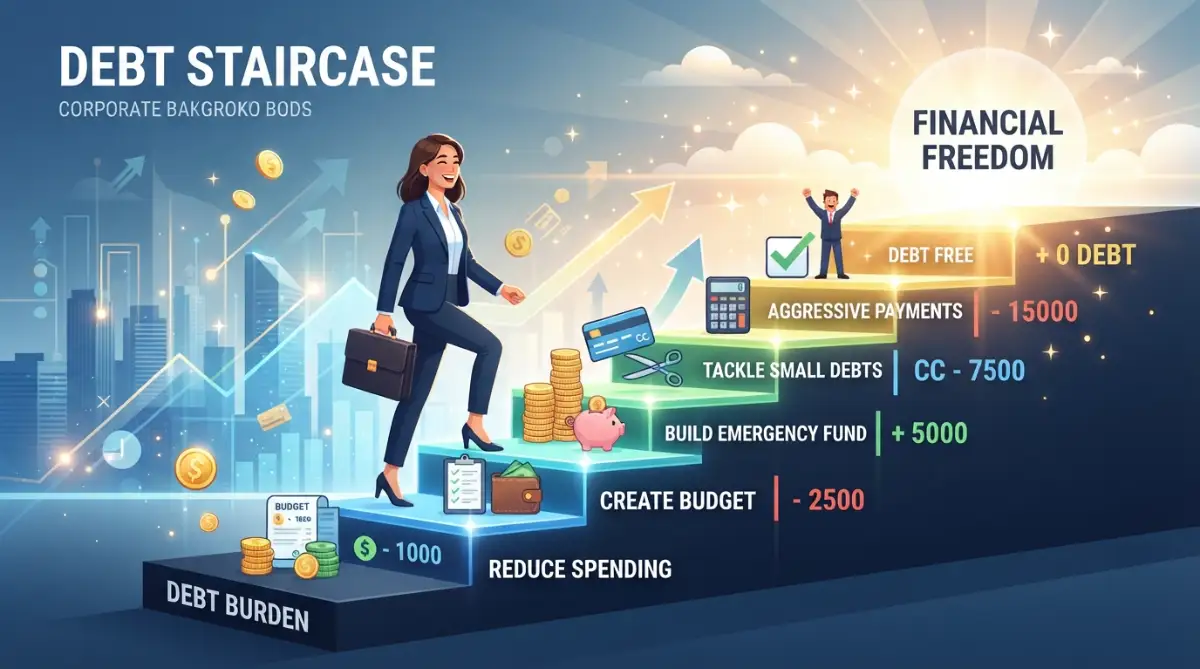
Building a Sustainable Financial Foundation for the Future
Lowering your debt ratio is not just a quick trick to satisfy a mortgage underwriter. It is about building a secure life so that you can enjoy your home without constant money stress.
To keep your finances healthy over the long term, you must create a protective shield around your wallet. This is why you need to learn how to build a bulletproof emergency fund fast.
An emergency fund acts as a safety net of cash that protects you when unexpected expenses happen. If your car breaks down or your home needs a sudden repair, you will not have to rely on high-interest credit cards.
Relying on credit cards during an emergency will instantly throw your debt ratio back into the danger zone. Having cash savings allows you to handle life's surprises while keeping your debt ratios perfectly low and stable.
Try to save at least three to six months of your basic living expenses in a separate bank account. This simple habit will give you immense peace of mind and protect your home investment for many decades.
The Danger Zones: Major Pitfalls That Can Ruin Your Mortgage Approval
When people are trying to fix their debt ratios, they often make innocent mistakes. These errors can trigger red flags for the bank and lead to an immediate rejection of your home loan application.
1. Changing Your Job or Quitting Your Career
Lenders love stability more than anything else when they look at your financial profile. If you change your job right before or during your mortgage application, the bank will get highly worried.
Even if your new job pays more money, a sudden career move can delay your approval. Lenders want to see a steady two-year history in the same field of work to feel safe.
If you must change jobs, try to wait until after your home loan is fully closed and you have the keys in your hand. This keeps your application file smooth and free from unnecessary reviews.
2. Missing or Delaying a Loan Payment
A single late payment can severely damage your credit history and halt your mortgage process in its tracks. Lenders check your credit report right before they issue the final approval for your loan.
You must understand what happens if you miss a personal loan EMI payment so you can avoid this terrible trap. Even a delay of a few days can cause your interest rate to spike or lead to an instant loan denial.
Set up automatic payments for all your credit cards and personal loans during this transition. This simple setup ensures that you will never miss a due date, keeping your financial reputation completely spotless.
3. Depositing Large and Undocumented Cash Amounts
If you deposit a large sum of cash into your bank account, the bank will want to know exactly where it came from. This is due to strict banking regulations designed to prevent illegal money activities.
If you cannot prove the source of the cash with a clear paper trail, the lender will not allow you to use that money for your down payment. It can even cause the bank to put your entire application on hold.
If a family member is giving you money as a gift for your new home, make sure you document it properly. Ask them to write an official gift letter that clearly states the money does not need to be paid back.
4. Co-signing Loans for Friends or Family Members
Co-signing a loan for someone else is a generous act, but it is highly dangerous for a home buyer. When you co-sign a loan, you are legally responsible for that entire debt.
The bank will count that full monthly payment as part of your own debt-to-income ratio, even if you are not the one paying it. This can instantly push your ratio past the acceptable limit.
Avoid co-signing any student loans, car notes, or personal loans for anyone else until your mortgage is fully finalized. Protect your own borrowing power first so you can secure your family's future.
5. Falling for Risky Borrowing Traps and Personal Loans
Many buyers try to take out a personal loan to cover their down payment or moving expenses. This is a massive mistake that will destroy your chances of getting approved for a home loan.
Taking out new credit right before a mortgage shows the lender that you are under immense financial pressure. You should learn about the getting approved personal loan mistakes to avoid before you make any sudden borrowing decisions.
Instead of looking for more credit, focus your energy on saving cash and lowering your current balances. Keeping your credit history clean and simple is the absolute best way to win the bank's trust.
6. Financing Large Purchases Before Closing
Many buyers make the mistake of financing a new refrigerator, AC, or furniture on EMI right after their loan is pre-approved. Never do this. Lenders often perform a final 'soft' credit pull just days before you sign the final papers. Any new debt appearing at the last minute can lead to an immediate rejection of your mortgage, even if you were already pre-approved."
Your Path Forward: Taking Your First Step Toward Your New Home Today
Lowering your debt-to-income ratio may feel like a difficult mountain to climb, but it is entirely possible with patience and a clear plan. Every single small step you take today brings you closer to the front door of your dream home.
By calculating your numbers, avoiding new debts, and dodging common financial pitfalls, you are building a bright and stable future. You now have the exact knowledge and tools that many professional financial planners use.
Do not wait for a perfect moment to begin your financial cleanup journey. Start by looking at your current monthly bills tonight, and make a commitment to improve your numbers day by day.
You deserve the peace of mind and security that comes with owning your own home. Take action today, trust the process, and watch your homeownership dreams turn into a beautiful reality.

Quick Tips to Fix Your Debt-to-Income Ratio
Here are five simple, bite-sized tips to help clean up your financial profile before you apply for a home loan:
- Combine Small Bills: Merge multiple small credit card balances into one single, lower monthly payment.
- Freeze New Shopping: Avoid buying a new car, furniture, or appliances on credit before your mortgage closes.
- Keep Clean Paperwork: Make sure all your extra income is legally documented with official bank statements.
- Stick to Your Job: Avoid changing careers or quitting your job until you have your house keys in hand.
- Save a Cash Cushion: Build a small emergency fund so unexpected bills do not end up on your credit card.
Audit Your Credit Report:
Check your credit report for errors months before applying. An old debt that was paid off but still shows as 'active' can artificially inflate your DTI. Disputing these errors early ensures the bank sees an accurate, healthy version of your finances.
Read and Laugh
The Loan Officer's Heart 🩺
A man was preparing to undergo a heart transplant surgery. The doctor came into his room to explain his options.
Doctor: "We have three options available for you today. The first is the heart of a 20-year-old athlete, the second is the heart of a creative artist, and the third is the heart of a bank loan officer."
Patient: "I will go with the loan officer's heart!"
Doctor (surprised): "But why? The athlete's or the artist's heart would normally be much stronger and healthier!"
Patient: "Trust me, doc. The loan officer's heart has never been used, so it is still brand new!"
It took me nearly a year of hard work and small sacrifices, but the day I finally held the keys to my own home made every single effort worth it. You do not have to fix everything overnight, but taking that very first step today will change your financial life. Start looking at your numbers tonight, because your future self is counting on you to make this happen.
Frequently Asked Questions (FAQs)
1. What is a good Debt-to-Income (DTI) ratio to get approved for a mortgage?
Most traditional lenders look for a "back-end" DTI ratio of 43% or lower. This means your total monthly debt payments plus your new future housing costs should not exceed 43% of your gross monthly income. However, keeping your ratio under 36% is ideal and can help you secure the best interest rates.
2. Should I close my old credit cards to lower my debt ratio?
No, you should never close old credit card accounts before applying for a home loan. Closing an account reduces your total available credit, which increases your "Credit Utilization" percentage and can quickly lower your credit score. Instead, pay off the balance and keep the account open but stop using the physical card.
3. Will starting a new side hustle help lower my DTI immediately?
Not instantly. While increasing your income does lower your DTI, lenders require proof of consistent and stable earnings. Usually, banks want to see a two-year history of side-hustle, overtime, or bonus income—backed by tax returns or bank statements—before they will count it toward your mortgage application.
4. Why do mortgage lenders care more about my monthly payments than my total debt?
Lenders calculate DTI based on your monthly cash flow, not your total outstanding balance. They want to ensure you have enough money left over each month to comfortably pay your new mortgage. Paying off a small debt completely removes its required monthly minimum payment, which instantly improves your DTI percentage.
5. Which is better for mortgage approval: the Debt Snowball or Debt Avalanche method?
For mortgage approval purposes, the Debt Snowball method is often more effective. While the Avalanche method saves you more money on interest, the Snowball method eliminates individual small debts faster. By completely knocking out smaller bills, you quickly remove required monthly minimums, which drops your DTI ratio faster.
6. Is it safe to finance new furniture or a car after I get pre-approved?
Absolutely not. Financing a large purchase adds a new monthly payment to your credit profile. Lenders almost always perform a final "soft" credit check just days before closing. Any new debt appearing at the last minute can push your DTI over the limit and cause an immediate loan rejection, even if you were already pre-approved.
7. What is the "10-Month Rule" in mortgage lending?
The 10-Month Rule is a helpful banking guideline regarding installment loans (like car loans or personal loans). If your loan has fewer than 10 monthly payments remaining, many lenders will completely exclude that monthly payment from your DTI calculation, as the debt will be paid off very soon.
8. Can I use a large, unexpected cash deposit for my down payment?
Lenders are very strict about large cash deposits due to banking regulations. If you deposit a large sum of cash, you must provide a clear paper trail proving where it came from. If it is a gift from a family member, you will need an official "gift letter." Unexplained or undocumented cash cannot be used during the mortgage process.
Financial Disclaimer:
The information provided in this article is for educational and informational purposes only and should not be construed as professional financial, legal, or tax advice. Mortgage lending rules and guidelines vary by location, lender, and individual financial situations. Always consult with a certified financial planner, mortgage broker, or licensed professional before making major financial decisions or applying for home loans.
About the Author
Reviewed by Mithun Halder (Personal Finance & SEO Expert) & The FinanceInfoIn Editorial Team
The FinanceInfoIn Editorial Team researches personal finance, investing, insurance, mortgages, cryptocurrency, and consumer financial topics. Every article is carefully reviewed to provide clear, practical, and trustworthy educational information based on credible sources and industry best practices.
©2026 FinanceInfoIn. All rights reserved.