The Silent Killer of New Businesses: Why Your Great Idea Might Fail
I once spent months building what I believed was a brilliant mobile app. I invested my time, energy, and savings because I was convinced people would love it.
When I finally launched it, almost nobody downloaded it. That painful experience taught me a lesson I have never forgotten: I had built something people did not actually need.
Many aspiring entrepreneurs make the same mistake. They get excited about an idea and spend money on websites, logos, or product development before knowing whether there is real demand. By the time they realize the market is not interested, they have already lost valuable time and money.
The good news is that it does not have to happen that way. You can validate your startup idea before making a major investment. In this guide, you will learn simple, free methods to test your idea, gather honest feedback, and find out whether people are truly interested before you build.
Why We Fail to See the Truth About Our Business Ideas
We often fall in love with our own thoughts. When a new business idea pops into your head, your brain only looks for reasons why it will work.
This is called confirmation bias. It makes you ignore the warning signs and focus only on the positive feedback.
If you ask your friends and family if they like your idea, they will probably say yes. They want to make you happy and do not want to hurt your feelings.
But their polite words will not pay your bills. You need real, honest feedback from people who have the actual problem you want to solve.
Testing your idea first helps you see the truth. It keeps you safe from wasting time, energy, and money on a dead end.
Let us look at a simple way to separate good ideas from bad ones without opening your wallet.
Find Your Real Customers and Talk to Them First
The first step in testing your idea is talking to people. You need to find the people who are suffering from the problem your business aims to solve.
Do not try to sell them anything yet. Your only goal right now is to understand their daily struggles and frustrations.
You can find these people on platforms like Reddit, Facebook Groups, or specialized forums. Look for active communities where people ask questions related to your niche.
Look for Real Pain Points in Online Forums
Go to Reddit and search for keywords related to your business idea. Read the comments to see what people are complaining about.
If you want to start a meal prep service, look for groups where busy parents talk about dinner time. You will quickly see their real struggles, like lack of time or picky eaters.
Pay close attention to the exact words they use to describe their problems. These words will help you write your marketing copy later.
Ask Open-Ended Questions to Get Honest Answers
When you post in these groups, do not say, "Hey, I have an idea for a business." Instead, ask questions that make people share their experiences.
You can ask: "What is the hardest part about preparing healthy meals on a busy weeknight?"
This kind of question opens the door for long, detailed answers. People love to talk about their problems when someone is willing to listen.
If you listen closely, your future customers will tell you exactly what they are willing to pay for.
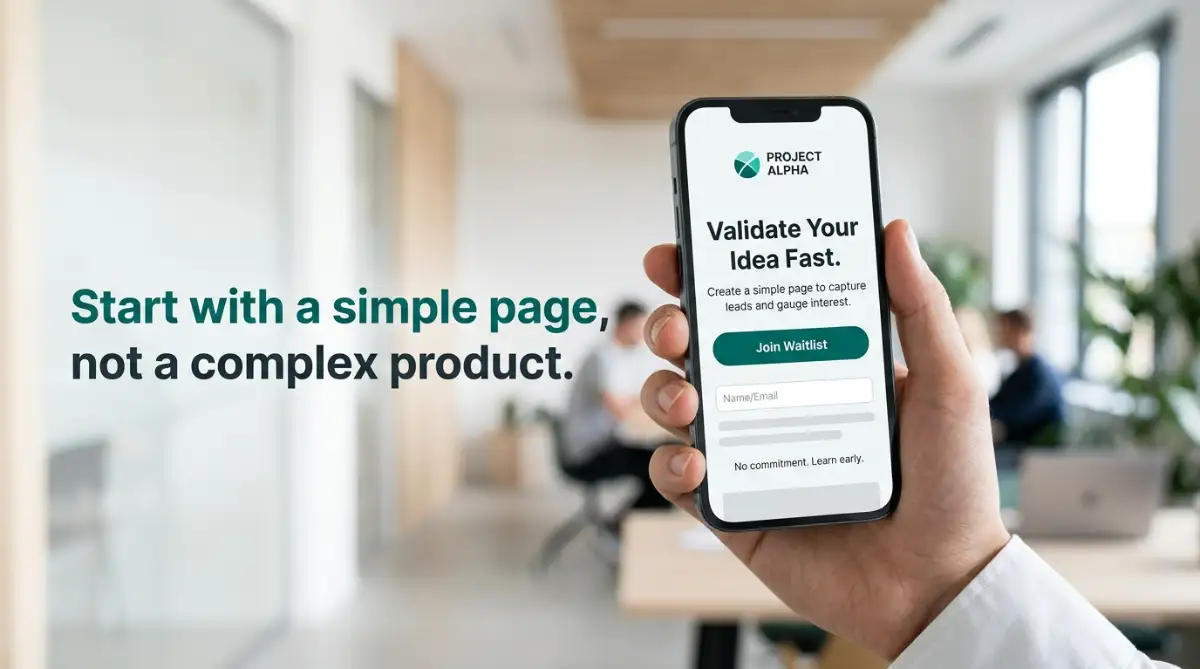
Once you have a clear understanding of your customers' biggest challenges, the next step is to see whether they are willing to take action. The easiest way to do that is by creating a simple landing page that explains your idea and measures real interest.
Create a Simple Landing Page with Zero Budget
Once you have talked to people, you need to see if they will take action. A great way to do this is by building a simple, one-page website.
You do not need to hire a developer or pay for web hosting. You can use free website builders like Carrd or Google Sites.
Your landing page needs to explain your solution clearly. It should have a catchy headline, a few bullet points about the benefits, and a signup box.
Write a Headline That Promises a Clear Solution
Your headline should tell visitors exactly what they will get. It must focus on the main benefit you discovered during your research.
Instead of saying "We Offer Fresh Meals," try something like "Healthy Family Dinners Prepared in 10 Minutes."
Make the page simple and clean. Use high-quality free images from sites like Unsplash to make it look professional.
Add a Clear Call to Action to Measure Interest
The most important part of your landing page is the call to action. This is usually a button that says "Join the Waitlist" or "Get Early Access."
To get onto the list, people must give you their email address. This is a small but important commitment.
If someone is willing to give you their email, they are showing real interest in your solution. If nobody signs up, it might mean the demand is not there.
Pro Tip: I used to think I needed a complete website before talking to any customer. I spent weeks setting up payment systems and writing terms of service pages. Now, I know that a simple form with a clear promise is all you need to see if people care. Keep it simple and save your energy for the actual feedback.
Run a Fake Door Test to Measure Real Buying Intent
An email address is great, but a purchase is the ultimate validation. A "fake door test" helps you see if people will actually pay for your solution.
On your landing page, instead of a waitlist button, you can put a "Buy Now" or "Book Now" button.
When a user clicks the button, a polite message pops up. It can say: "We are currently at full capacity, but enter your email to get notified when we open new spots."
Why This Method Works Safely
This test tells you how many people actually wanted to buy. It gives you real data on purchase intent without taking any money.
A strong click-through rate on your call-to-action can indicate genuine buying interest, although the ideal percentage varies by industry and audience. You can now build the product with high confidence.
If nobody clicks the button, you know it is time to change your plan. You saved yourself from building a product that would not sell.
Keep your message friendly and honest. This keeps your audience happy and preserves their trust in your brand.
Share Your Idea in Online Communities Without Being Spammy
Now that you have a landing page, you need to drive traffic to it. You do not need to pay for ads to get your first hundred visitors.
Go back to the online communities where you did your initial research. Share your page, but do it in a helpful way.
Do not just drop your link and leave. That is spam, and you will get banned quickly.
Give Value Before You Ask for Anything
Write a helpful post sharing what you have learned about the problem. Share some free tips that people can use right away.
At the end of your post, mention your new project. You can write: "I am working on a tool to make this even easier. If you want to try it out, you can join the free waitlist here."
People are happy to check out your link when you have already helped them. This approach builds goodwill and trust.
Use the Power of Personal Storytelling
Tell people why you are trying to solve this problem. Share your own struggles and your journey.
People connect with human stories much more than corporate pitches. A simple, honest post can bring hundreds of targeted visitors to your testing page.
Keep track of how many people visit your page and how many sign up. These numbers will guide your next steps.
Analyze Your Testing Data and Make a Smart Decision
After running your tests for a week or two, it is time to look at the numbers. The data will tell you what to do next.
Look at your signup rate. If more than ten percent of your page visitors sign up, you have strong interest.
If the numbers are very low, do not get discouraged. This is actually a win because you saved your money.
What to Do If Your Idea Does Not Get Traction
If people are not signing up, you have two choices. You can either change your offer or try a new idea.
Sometimes, a small change in your headline or target audience can make a huge difference. Try tweaking your message and running the test again.
If it still does not work, let the idea go. You have the freedom to try something else because you have not spent a dime.
This is the beauty of zero-dollar validation. You can fail fast, learn, and try again until you find a business idea that works.
Smart Tactics to Test Your Idea Like an Industry Expert
Once you have your basic landing page ready, you need to think like a seasoned researcher. Testing an idea is not just about collecting emails; it is about finding deep truths about human behavior.
Many people make the mistake of stopping after they get a few signups. To build a lasting business, you need to go deeper into your target audience's mind.
Offer a High-Value Digital Download
A great way to see if people really care about your topic is to offer something helpful for free. This is often called a lead magnet.
You can create a simple PDF checklist or a short guide using free design tools. The guide should offer a quick fix to a small part of their main problem.
If people are willing to enter their email to download your guide, they are showing you that they trust your advice. This trust is the foundation of your future business.
Use the Power of Waitlist Milestones
Do not just let people sign up and forget about them. Keep them excited by using a milestone system on your waitlist.
You can tell your signups that if they invite three friends to the list, they will get early access to your product. This turns your early fans into a free marketing team.
This viral loop helps you reach new people without spending money on ads. It also proves that your audience is excited enough to share your name with others.
Run a Five-Dollar Micro-Test
If you want to speed up your testing, you can use a tiny budget on social media platforms. You do not need thousands of dollars to see if an ad works.
Create a simple ad with a clear image and a headline pointing to your landing page. Run the ad for just a couple of days with a budget of five dollars.
Watch how many people click on your ad compared to how many actually sign up on your page. If your click rates are high, you have found a message that connects with people.
Before investing in marketing, make sure your budget can comfortably support your testing efforts without affecting your essential expenses. to keep their budgets balanced. Keeping your personal expenses low gives you more time to test your business ideas.
Run Live Interactive Q&A Sessions
Another expert secret is to host a free live session on social media. You can use free tools to stream to your audience.
Invite people to join and ask questions about the problem you want to solve. This gives you a chance to talk to them live and hear their struggles in real-time.
If people show up and ask lots of questions, you know the topic is hot. If nobody shows up, you may need to rethink your target market.
Just as you would calculate home solar panel requirements easily before installing a power system, you must estimate your customer demand before building a product. Running these live sessions helps you calculate that demand with real human data.

Dangerous Pitfalls That Can Drain Your Savings
Testing a business idea can be exciting, but it is also full of hidden traps. Many new entrepreneurs fall into these traps and end up losing their hard-pressed savings.
One of the biggest mistakes is falling in love with your own solution instead of the problem. When you love your idea too much, you become blind to the negative feedback.
If customers tell you that your idea is not helpful, you must listen to them. Do not try to convince them that they are wrong.
Building the Product Too Quickly
Another common error is starting to build the actual product too early. You might think you just need a few features to make people buy it.
But building takes time, and time is money. Every week you spend coding or manufacturing is a week you are not talking to customers.
You should only start building when you have clear, written proof that people want to buy. This proof can be in the form of pre-orders or high waitlist numbers.
If you struggle with high stress while testing ideas, you should learn how to manage high blood pressure naturally through daily diet changes to keep your health in top shape. The stress of business building can take a heavy toll on your body if you do not take care of yourself.
Listening to Polite Lies from Friends
We all want our friends to support us. But asking your close friends for business advice is a major trap.
They will almost always tell you that your idea is amazing because they love you. They do not want to see you sad or disappointed.
Instead, look for feedback from strangers who have no reason to spare your feelings. Their cold, honest truth is much more valuable than polite praise.
According to official small business statistics, a huge percentage of new businesses fail because there is no market need for their services. This is why getting unbiased feedback from day one is so important for your journey.
Ignoring the Power of Simple Cleanups
Many founders get messy when they test different ideas. They leave old landing pages online and let their email lists get cold.
Maintaining your startup systems is similar to how to clean solar panels safely without scratching them to ensure everything runs smoothly over time. Keep your workspace clean, delete old drafts, and keep your communication channels clear.
When your testing system is organized, you can see the data clearly. This helps you make smart choices without getting overwhelmed by clutter.
Your Action Plan for Tomorrow
Starting a business does not have to be a massive financial risk. By using the steps in this guide, you can find out if your idea has wings without spending a single dollar.
Focus on finding real people with real problems. Talk to them, listen to their stories, and write down their struggles.
Build a simple page to see if they will take action. Let the data guide your next moves, and do not be afraid to change your direction if the feedback tells you to do so.
Remember that every failed test is not a waste of time. It is a step closer to finding an idea that actually works.
I used to worry that failing meant I was not smart enough to run a business. But once I started testing my ideas with zero budget, I realized that failure is just a helpful lesson.
Instead of spending weeks building your product, spend the next few days talking to potential customers. The feedback you receive today could save you months of wasted time and money later.
5 Smart Tips for Validating Your Startup Idea for Free
1. Talk to Your Target Audience First
Before investing time or money, ask potential customers about their biggest challenges. Honest conversations can reveal whether your idea solves a real problem.
2. Create a Simple Landing Page
Build a free landing page that explains your idea and includes a sign-up form. The number of visitors who join your waiting list can help measure genuine interest.
3. Test Demand on Social Media
Share your idea in relevant Facebook groups, LinkedIn communities, Reddit discussions, or other industry forums. Pay attention to comments, questions, and engagement to understand market demand.
4. Study Your Competitors
Research businesses offering similar products or services. Identify what they do well, where customers complain, and how your idea could provide a better solution.
5. Launch a Small MVP Before Scaling
Instead of building a complete product, create a simple prototype or minimum viable product (MVP). Early user feedback will help you validate your idea and improve it before making a larger investment.
Common Questions About Testing Your Startup Idea
How many email signups do I need to prove my idea is good?
You should aim for at least one hundred signups from people who are not your friends or family. This number shows that there is a genuine interest in your topic.
Can I validate a physical product idea without making it first?
Yes, you can use 3D drawings or simple mockups to show what the product will look like. You can then run a pre-order campaign to see if people will pay before you start manufacturing.
What should I do if nobody signs up for my waitlist?
If your signup rate is low, try changing your headline or target audience. If you still get no response after a few changes, it is best to move on to a different idea.
Is it safe to share my business idea online?
Most people are too busy with their own lives to steal your idea. Sharing your concept openly is necessary to get the feedback you need to build a successful business.
How much time should I spend on the validation phase?
You should spend about two to four weeks testing your idea. This is enough time to gather helpful data without getting stuck in endless planning.
Do I need to register a business name before testing?
No, you do not need to register a business or buy a domain name to test an idea. Use free tools and social media accounts to keep your costs at zero.
How do I know if my target market is too small?
If you cannot find active online groups or forums talking about the problem, your market might be too small. A good business idea needs an active community of people looking for solutions.
Disclaimer
The information provided on this website is for educational and informational purposes only. Starting a business involves risks, and readers should consult with professional financial or legal advisors before making any major financial decisions. We do not guarantee any specific business success or financial returns based on the strategies shared here.Lending regulations, eligibility requirements, and consumer protections vary by country and financial institution.